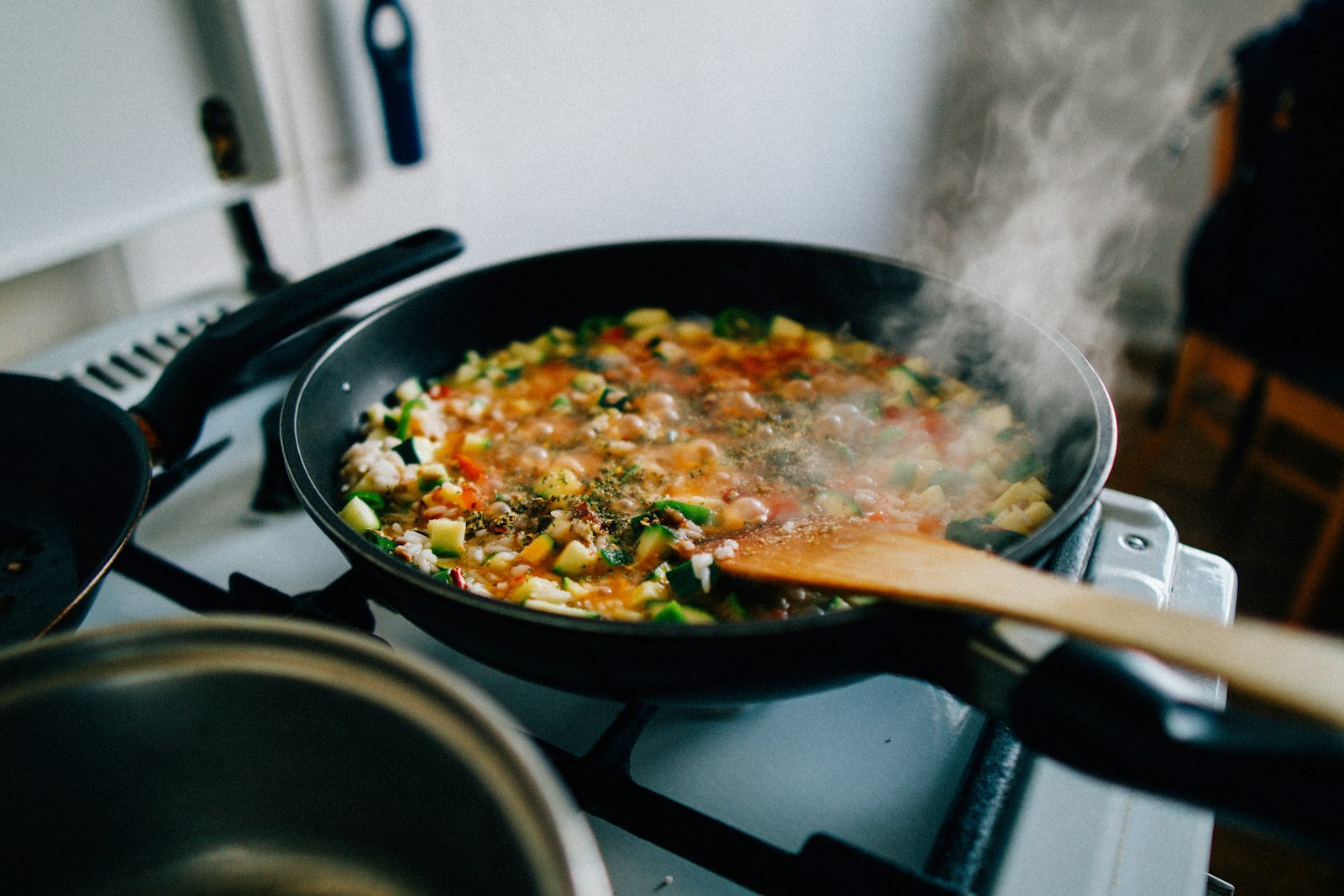
An induction cooktop heats your pan directly with a magnetic field, so very little heat escapes into the kitchen. That means water often boils faster, the kitchen stays cooler and less energy is wasted. You can try it with a plug-in single burner before you replace a whole stove.
Quick answer: Use flat-bottomed pans that a magnet sticks to, match the pan to the burner size, start on high to heat quickly, then turn down sooner than you would on gas, and use lids. Induction sends about 85% of its energy into the food, compared with about 32% for gas.
Why induction wastes less heat
On a gas stove, much of the flame’s heat goes around the pan and into the room. ENERGY STAR reports that induction cooktops are about 85% efficient, compared with roughly 75–80% for standard electric coil or glass tops and about 32% for gas. That makes induction about 5–10% more efficient than regular electric and about three times more efficient than gas (ENERGY STAR).
Less wasted heat also means a cooler kitchen in summer, so your air conditioner or fan works less. Induction also burns no fuel indoors. In California, where the grid gets more power from solar each year, cooking with electricity is a simple way to cut your home’s carbon footprint.
What you need
- An induction cooktop, range or plug-in single burner (a portable burner usually plugs into a standard 120-volt outlet)
- Induction-ready pans: cast iron, enameled cast iron, carbon steel or magnetic stainless steel
- A small fridge magnet to test your pans
- Lids that fit your pots
How to cook faster with induction
- Test your pans. Hold a magnet to the bottom of each pan. If it sticks firmly, the pan works on induction. Plain aluminum, copper and glass pans won’t heat unless they have a magnetic base.
- Match the pan to the burner. Use a pan that covers the marked ring. A pan that is much smaller may not be detected, and a much bigger one heats unevenly.
- Prep before you turn it on. Induction heats fast, so chop and measure your ingredients first. Food can go from sizzling to burned quickly.
- Start high, then turn down early. Use high or “boost” to heat water or a pan quickly, then lower the setting right away. Induction responds almost instantly, much like gas.
- Use a lid. Covering pots traps heat and steam, so water boils sooner and you can simmer at a lower setting.
- Turn it off a little early. The pan stays hot for a short while after the burner shuts off. Use that heat to finish cooking.
- Wipe it clean. Once the glass is cool, wipe it with a damp cloth. Because the glass itself doesn’t get as hot as a coil, spills are less likely to bake on.
Common mistakes to avoid
- Dragging cast iron across the glass. Lift heavy pans to avoid scratches.
- Assuming the surface is cool. The glass is warmed by the hot pan, so it can still burn you right after cooking.
- Using warped pans. A pan that rocks or doesn’t sit flat heats poorly. Flat bottoms work best.
- Ignoring medical device warnings. If someone in your home has a pacemaker or other implanted device, check with their doctor and the cooktop maker about safe distance.
Frequently asked questions
Is induction cooking faster than gas?
Often, yes. Because heat goes straight into the pan, induction usually boils water faster than both gas and standard electric burners. Exact times depend on the burner’s power and your pot.
Do I need new pans for induction?
Only if your current pans aren’t magnetic. Cast iron and most stainless steel already work. Do the magnet test before buying anything new.
Does an induction cooktop save money?
It uses less energy to do the same job, but your savings depend on what you cook and your gas and electricity prices. Many people also save by cooking more on a small portable burner instead of heating a full oven.
Is induction safe for kids to use?
Induction is often considered safer than gas because there is no open flame, and most units shut off when no pan is detected. The glass still gets hot from the pan, so teach everyone to treat it like any stovetop.
See your food impact
Curious how cooking, food choices and kitchen habits add up? Try our free Food & Diet Simulator to see your household’s food footprint and which changes cut the most carbon.
Related guides
- How to Replace Your Full-Size Oven with a Toaster Oven for Small Meals
- How to Make Zero-Waste Vegetable Broth from Scraps
- How to Organize Stackable Bins in Your Fridge for Better Airflow
Sources
- ENERGY STAR, Emerging Technology Award: Residential Induction Cooking Tops
- U.S. Energy Information Administration, Wind and solar generated a record 17% of U.S. electricity in 2025
Written and reviewed by the Accessible Sustainability Alliance editorial team. Last updated October 5, 2026.