Onion skins, carrot peels and celery ends usually go straight into the trash. Saved in a freezer bag, they become a free, flavorful vegetable broth for soups, rice and sauces. It is one of the easiest ways to waste less food and save money in the kitchen.
Quick answer: Keep a bag of clean vegetable scraps in the freezer. When it is full, cover the scraps with cold water, add a bay leaf and peppercorns, simmer about an hour, strain, cool quickly and store the broth in the fridge for a few days or the freezer for months.
Why scrap broth matters
Food waste is a big problem. The U.S. EPA estimates that the average family of four spends almost $3,000 a year on food that never gets eaten, and it suggests turning vegetable scraps into soup stock as one easy fix (EPA). The USDA estimates that 30 to 40 percent of the U.S. food supply is wasted (USDA).
Wasted food also has a climate cost. When food rots in a landfill, it releases methane, a powerful greenhouse gas. Getting one more use out of your scraps before they go to the green bin or compost pile means less waste and less money spent on boxed broth.
What you need
- A large freezer bag or container for collecting scraps
- A big soup pot
- A colander or fine strainer
- Jars or freezer-safe containers
- Optional: bay leaves, peppercorns, garlic and herb stems
Best and worst scraps for broth
- Great: onion and leek ends, onion skins, carrot peels, celery tops, mushroom stems, garlic, parsley and herb stems, corn cobs, tomato ends.
- Use a little: potato peels (can make broth cloudy), bell pepper ends.
- Skip: cabbage, broccoli, cauliflower and Brussels sprouts (strong, sulfur smell), beet peels (turn everything red), and anything moldy or slimy.
How to make vegetable broth from scraps
- Wash vegetables before you peel them, so the scraps are clean.
- Collect scraps in the freezer. Add them to your bag each time you cook until it is full, usually 4 to 6 cups.
- Fill the pot. Dump the frozen scraps into a large pot and cover them with cold water by about an inch.
- Add flavor. Toss in a bay leaf, a few peppercorns and a garlic clove or two if you like.
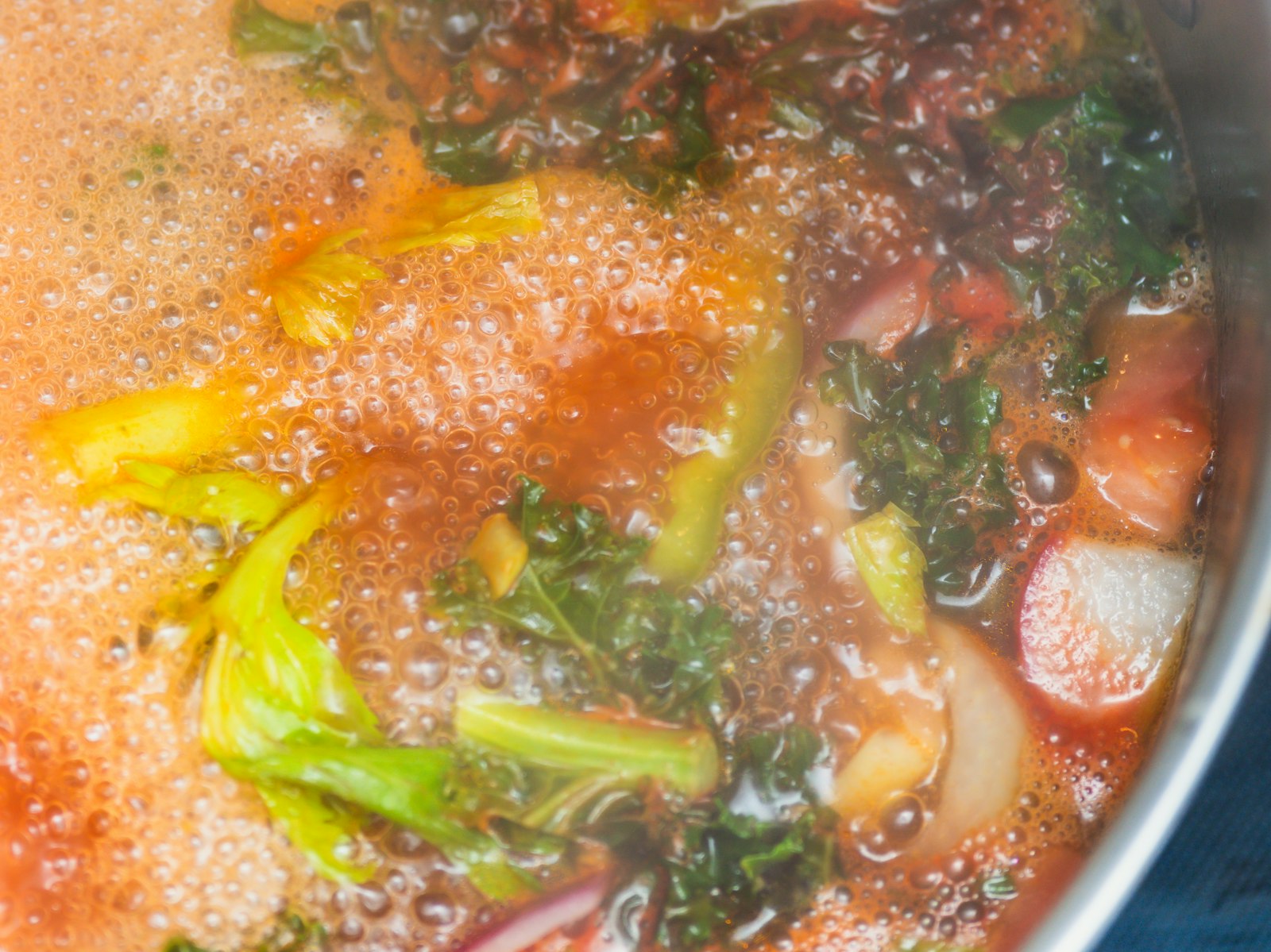
- Simmer. Bring it to a boil, then lower the heat and let it simmer gently for about an hour.
- Strain. Pour the broth through a colander or strainer into a large bowl. Press the scraps lightly to get out the liquid.
- Cool it fast. Divide the hot broth into shallow containers and refrigerate within 2 hours.
- Store and compost. Keep the broth in the fridge for 3 to 4 days or freeze it. Put the cooked scraps in your compost or green bin.
Tips
- Leave out salt until you use the broth. That way you can season each dish just right.
- Freeze in small portions, such as ice cube trays or 1-cup jars, so you thaw only what you need.
- Leave room in jars when freezing. Liquid expands and can crack glass.
- Reheat soups and broth to a rolling boil before eating, as food safety experts recommend.
Frequently asked questions
What vegetable scraps should not go in broth?
Avoid cabbage-family vegetables like broccoli, cauliflower, cabbage and Brussels sprouts, which can make broth bitter and smelly. Also skip beet peels, which turn broth red, and any scraps that are moldy or spoiled.
How long does homemade vegetable broth last?
USDA food safety guidance says leftovers like broth keep 3 to 4 days in the refrigerator. For longer storage, freeze it and use it within a few months for the best flavor.
How long can I keep vegetable scraps in the freezer?
Frozen scraps stay safe for a long time, but they taste best if you use them within a few months. Make broth whenever your bag fills up.
Can I compost the scraps after making broth?
Yes. Cooked vegetable scraps can go in your green bin. Some backyard compost guides suggest keeping heavily oiled or salted foods out of home piles, so plain scraps are best.
See your food impact
Want to see how food waste and diet choices add up for your household? Try our free Food & Diet Simulator to explore your footprint and find easy ways to waste less.
Related guides
- How to Label Your Fridge with FIFO Stickers to Cut Waste
- How to Freeze Herbs in Olive Oil Before They Wilt
- How to Set Up a Countertop Compost Bin in a Small Apartment
Sources
- U.S. EPA, Preventing Wasted Food at Home
- USDA, Food Waste FAQs
- USDA Food Safety and Inspection Service, Leftovers and Food Safety
Written and reviewed by the Accessible Sustainability Alliance editorial team. Last updated October 5, 2026.