FIFO means “first in, first out.” It is a simple rule restaurants use: the food that came in first gets used first. With a roll of masking tape, a marker and a few minutes after each grocery trip, you can use the same system at home and stop finding forgotten food in the back of the fridge.
Quick answer: Write the date on each new item (or on a sticker on its shelf spot) when you unpack groceries, put newer food behind older food, and keep an “eat first” spot up front for anything close to going bad.
Why FIFO labeling cuts food waste
A lot of good food gets thrown away simply because it was forgotten. The USDA estimates that food waste in the United States is between 30 and 40 percent of the food supply (USDA). ReFED, a national nonprofit that tracks food waste, reports that 29% of the U.S. food supply goes unsold or uneaten, and that most of it happens at consumer-facing businesses and in homes (ReFED).
Date confusion adds to the problem. The USDA Food Safety and Inspection Service explains that a “Best if Used By” date tells you when food is at its best flavor or quality and is not a safety date (USDA FSIS). Writing your own “opened” or “bought” date takes the guessing out of it. In California, any food you do end up tossing should go in the green organics bin under SB 1383, but eating it is always the better choice.
What you need
- Masking tape or removable sticker labels (painter’s tape peels off cleanly)
- A permanent marker kept in a cup on or near the fridge
- Optional: a small bin or basket labeled “Eat first”
- Optional: colored dot stickers if you want a color code for each week
How to label your fridge with FIFO stickers
- Clean out first. Take everything out, toss anything spoiled, and wipe the shelves. Start with a fridge you can see into.
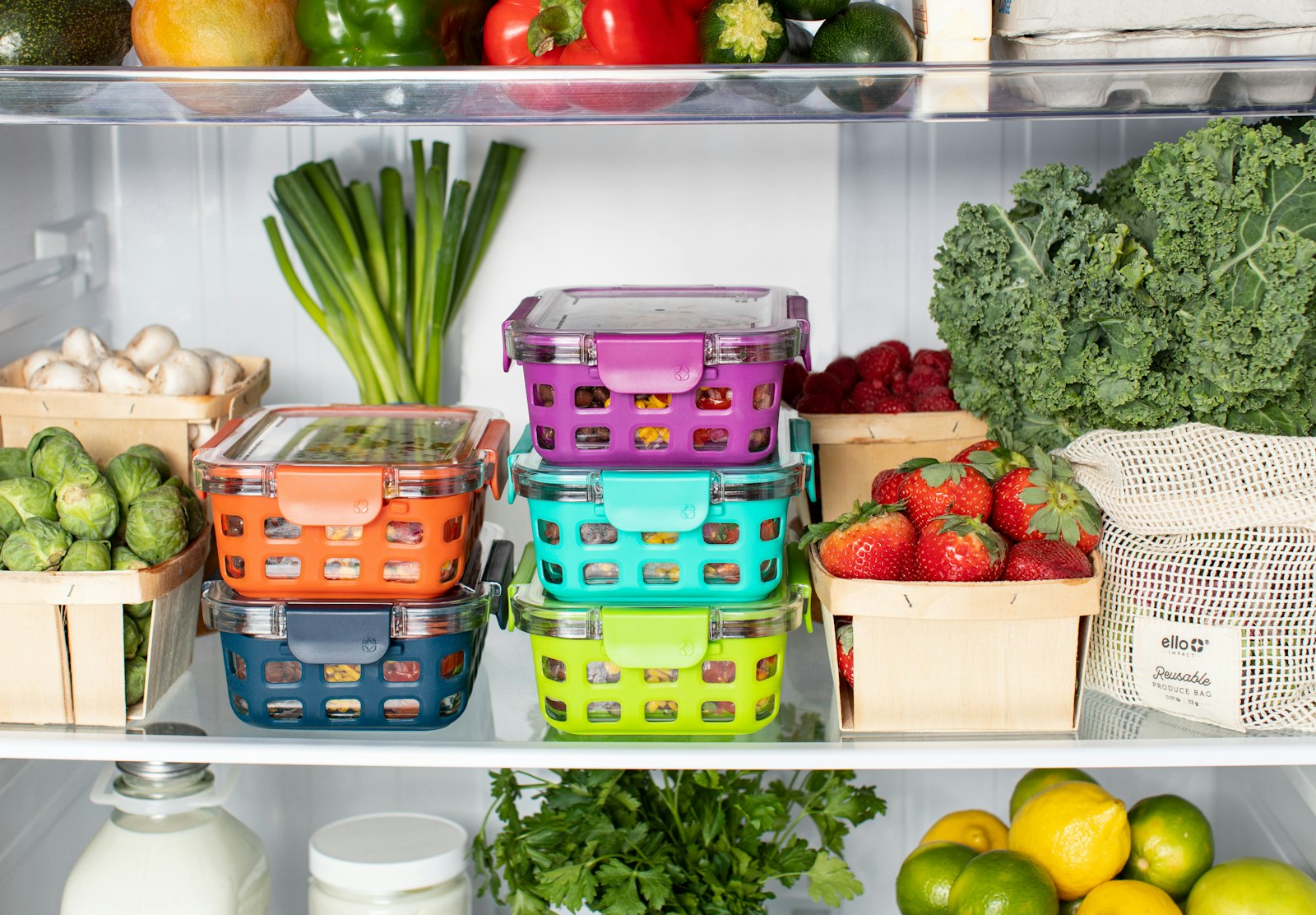
- Set up an “Eat first” zone. Pick a front spot on the middle shelf, at eye level, for food that needs to be eaten in the next day or two.
- Date as you unpack. After each grocery trip, write the purchase date on a small strip of tape and stick it on each perishable item. For leftovers, write what it is and the date you made it.
- Mark when you open. Jars, sauces and milk last a set time after opening, so add an “opened” date to the label the day you open them.
- Rotate: old to the front, new to the back. When you put away new yogurt, milk or cheese, slide the older ones forward and place the new ones behind them.
- Check twice a week. Pick two days, such as before you shop and midweek. Move anything getting close to its limit into the “Eat first” zone and plan a meal around it.
- Get your household on board. Tape a short note on the fridge: “Eat from the front. Check the Eat first bin.” Make it easy for everyone to follow.
Common mistakes to avoid
- Labeling everything except leftovers. Leftovers are often the first thing forgotten, so always date them.
- Stacking new food in front because it is easier. That one shortcut breaks the whole system.
- Treating every date as a safety deadline. Many foods are still fine after the “Best if Used By” date; check smell, look and texture, and follow USDA guidance for meat, poultry and seafood.
- Overbuying. Look in the fridge and make a list before you shop so you only buy what you will use.
Frequently asked questions
What does FIFO mean in a fridge?
FIFO stands for “first in, first out.” It means you use older food before newer food by keeping older items in front and newer ones behind. It is the same method grocery stores and restaurants use to cut waste.
How long do leftovers last in the fridge?
Many cooked leftovers are best eaten within a few days. The USDA’s free FoodKeeper app lists storage times for hundreds of foods, so you can check before you eat or toss something.
Is food safe after the best by date?
Often, yes. The USDA says a “Best if Used By” date is about quality, not safety. Infant formula is the one food federal rules require to carry a date, and you should always throw out food that looks or smells spoiled.
See your food impact
Want to know how much food your household wastes and what it costs the planet? Try our free Food & Diet Simulator to see how your shopping, cooking and leftovers add up.
Related guides
- How to Switch to Clear Bins So You Stop Forgetting Food
- How to Use a $6 Fridge Thermometer to Stop Food Spoilage
- How to Use a Free App to Turn Leftovers into Meal Plans
Sources
- USDA, Food Waste FAQs
- ReFED, Food Waste Data: Causes and Impacts
- USDA Food Safety and Inspection Service, Food Product Dating
Written and reviewed by the Accessible Sustainability Alliance editorial team. Last updated October 5, 2026.