
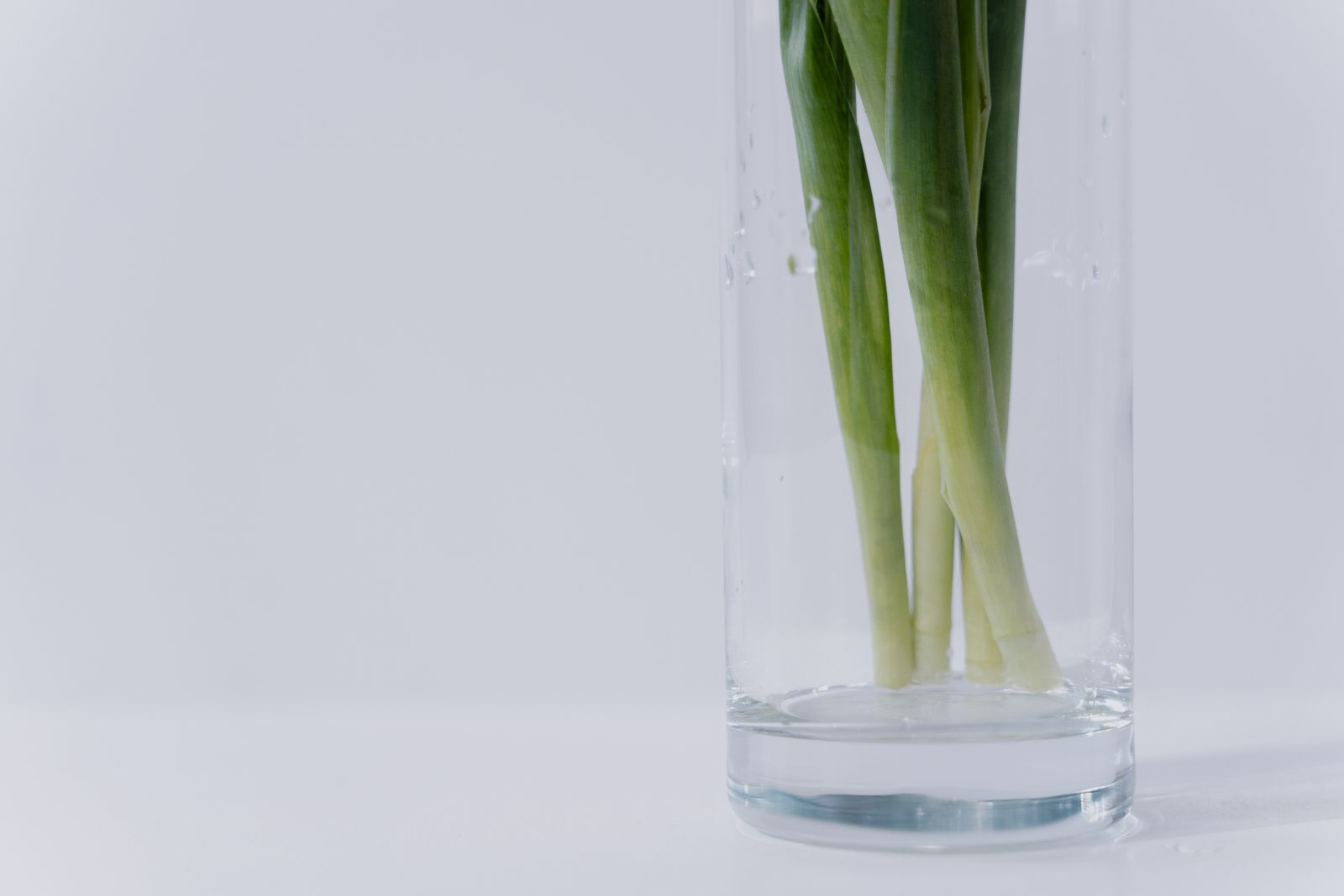
Green onions (also called scallions) are one of the easiest foods to regrow at home. Instead of throwing away the white ends with roots, you can stand them in a glass of water by a sunny window and grow fresh green tops in about a week. It is a fun, free project for any kitchen and a great first plant for kids.
Quick answer: Cut green onions about 1 to 2 inches above the roots, stand the white ends root-side down in a glass with about an inch of water, set it in a bright window, change the water every couple of days, and snip the new green tops when they are a few inches tall.
Why regrowing green onions matters
Food waste is a huge problem. The U.S. Department of Agriculture estimates that 30–40% of the U.S. food supply is wasted (USDA). Small scraps like onion roots are part of that, and when food rots in a landfill it gives off methane, a strong greenhouse gas.
In California, CalRecycle says organics like food scraps, yard trimmings, paper and cardboard make up half of what Californians dump in landfills (CalRecycle). Regrowing your scallions gets more food from what you already bought, and when the roots finally wear out, they can go in your green bin or compost.
What you need
- A bunch of green onions with the roots still attached
- A small glass, jar or shallow dish
- Clean water
- A sunny windowsill (or a bright spot under a grow light)
- Optional: a small pot with potting soil for longer-lasting plants
How to regrow green onions on your windowsill
- Cut the onions. Use the green tops for cooking. Leave about 1 to 2 inches of the white part attached to the roots.
- Stand them in water. Place the white ends root-side down in a glass or jar. Add water until the roots are covered, about an inch deep. Keep most of the white part above the water.
- Give them light. Set the glass in a sunny window, as the University of Illinois Extension recommends (Illinois Extension). The more bright light it gets, the faster the greens grow.
- Change the water. Pour out the old water and add fresh water every two or three days, or sooner if it looks cloudy or smells. Rinse the roots if they feel slimy.
- Watch them grow. You may see new green growth within a day or two. In about a week, the tops are often a few inches tall.
- Harvest with scissors. Snip off the green tops you need, leaving at least an inch of the white base so it can keep growing.
- Move them to soil (optional). After a few rounds in water, the onions often get thinner. Plant the root ends in a small pot of soil to get thicker, longer-lasting growth.
Tips for healthy green onions
- Use a narrow glass. It helps the onions stand up straight so they don’t tip over and rot.
- Don’t drown them. Keep the water at root level. Too much water on the white part can make it mushy.
- Rotate the glass. Turning it every few days keeps the tops from leaning toward the window.
- Know when to stop. Onions grown only in water usually slow down after a few harvests. When they look weak, compost them and start a new batch.
Frequently asked questions
How long do green onions take to regrow in water?
New green shoots often show up within a day or two. You can usually harvest a few inches of greens in about 7 to 10 days, depending on light and temperature.
How many times can you regrow green onions?
In water, most people get a few harvests before the plants get thin and tired. Moving them into a pot of soil helps them keep producing for much longer.
Why are my green onions slimy?
Slime usually means the water is old or too deep. Rinse the roots, trim off any mushy parts, and change the water more often.
Can you regrow other vegetables the same way?
Yes. Celery bases, leeks, lemongrass and romaine lettuce hearts can also sprout new growth in water. Most grow best when you move them into soil after the roots appear.
See your food impact
Want to know how much food your household wastes and what that means for the planet? Try our free Food & Diet Simulator to see your family’s food footprint and which habits cut the most waste.
Related guides
- How to Freeze Herbs in Olive Oil Before They Wilt
- How to Make Zero-Waste Vegetable Broth from Scraps
- How to Set Up a Countertop Compost Bin in a Small Apartment
Sources
- U.S. Department of Agriculture, Food Waste FAQs
- CalRecycle, California’s Short-Lived Climate Pollutant Reduction Strategy (SB 1383)
- University of Illinois Extension, Regrowing Scrap Veggies
Written and reviewed by the Accessible Sustainability Alliance editorial team. Last updated October 5, 2026.