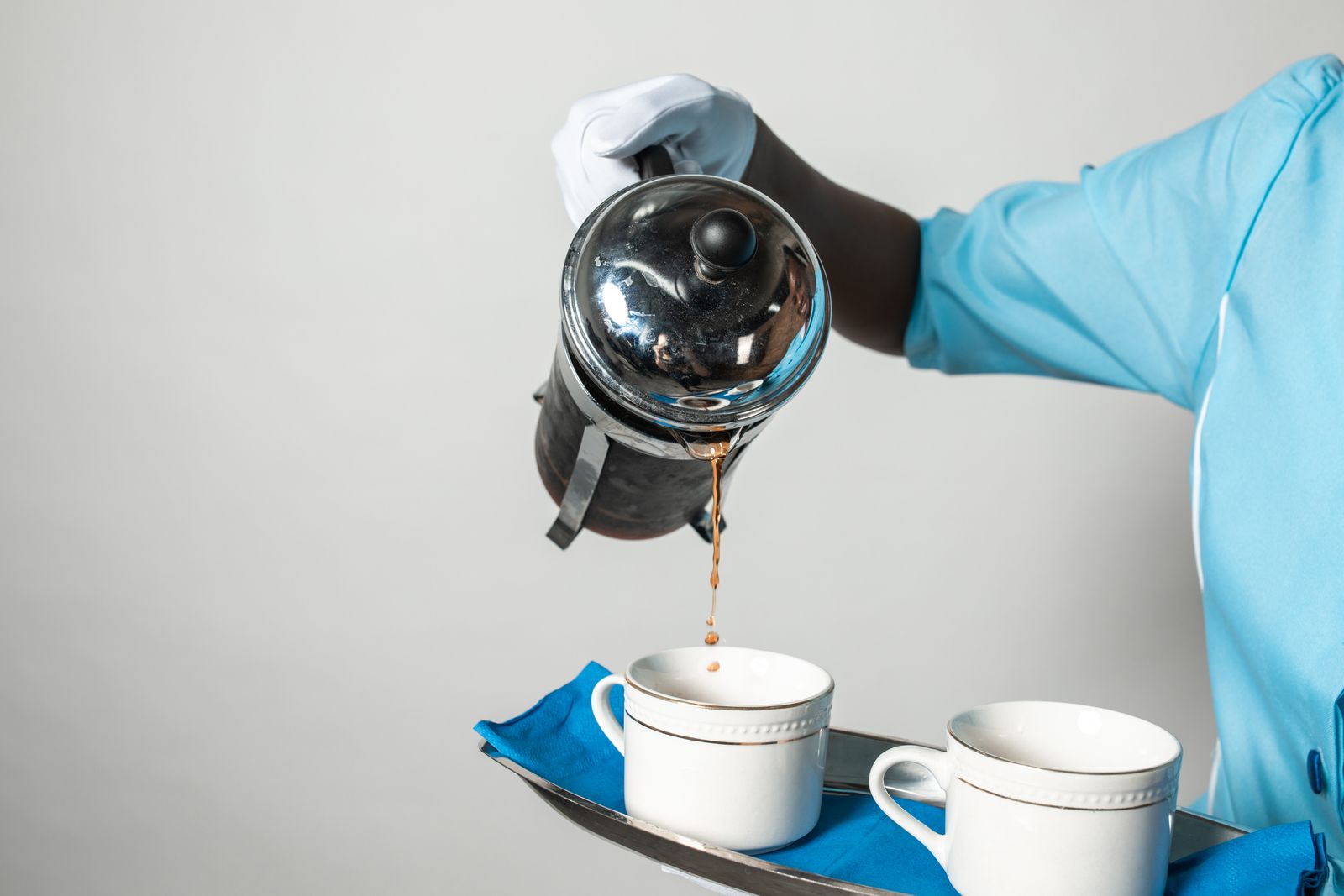
A French press makes rich, full-bodied coffee with nothing but hot water, ground coffee and four minutes. There are no single-use pods to buy or throw away, and the leftover grounds can go straight into compost. Here is how to make a great cup every time.
Quick answer: Add coarse ground coffee to the press (about 1 tablespoon per 4 ounces of water), pour in water just off the boil, stir, put the lid on and wait 4 minutes. Then press the plunger down slowly and pour. Measure carefully so you don’t waste coffee or water.
Why switch from pods to a French press
The biggest climate impact of coffee happens on the farm, not in your kitchen. Researchers at the Université du Québec à Chicoutimi found that growing and producing coffee causes roughly 40 to 80 percent of a cup’s total greenhouse gas emissions (The Conversation, via FlaglerLive). Their main advice: don’t waste coffee or water. Using more grounds than you need, or boiling extra water, can erase the benefit of any brewing method.
That makes measuring the key to a greener French press. It also removes the plastic or aluminum pod from every cup, and the grounds are easy to compost. Cornell University experts note that coffee grounds are a nitrogen-rich “green” compost material, though they should make up no more than about 20% of a pile (Cornell University).
What you need
- A French press (glass or stainless steel)
- Coarse ground coffee, about as coarse as sea salt
- A kettle
- A measuring spoon or kitchen scale
- A spoon for stirring (wood or plastic won’t scratch glass)
- A timer
How to brew coffee with a French press
- Heat only the water you need. Measure it into the kettle and bring it to a boil, then let it sit about 30 seconds.
- Measure the coffee. Start with about 1 tablespoon of coarse grounds per 4 ounces of water, then adjust to taste.
- Add coffee and water. Put the grounds in the press and pour the hot water over them, wetting all the grounds.
- Stir gently to break up any clumps.
- Put the lid on, but don’t press yet. Set a timer for 4 minutes.
- Press slowly. Push the plunger straight down with steady pressure. If it is very hard to push, your grind is too fine.
- Pour right away. Coffee left sitting on the grounds keeps brewing and turns bitter. Pour extra into a thermos.
- Clean up. Scoop or shake the grounds into your compost or green bin, then rinse the press.
Tips for better coffee
- Use a coarse grind. Fine grounds slip through the filter and make the coffee muddy and bitter.
- Brew only what you’ll drink. It saves coffee, water and energy.
- Skip the sink for grounds. They can build up in pipes. Compost them instead.
- Take apart the plunger now and then and wash the mesh filter to remove oils.
Frequently asked questions
How much coffee do I use in a French press?
A good starting point is about 1 tablespoon of coarse grounds for every 4 ounces of water. Use a little more for stronger coffee or a little less for milder coffee.
How long should French press coffee steep?
About 4 minutes is the standard. Shorter steeping makes weaker coffee, and much longer can taste bitter.
Is a French press better for the environment than coffee pods?
It removes single-use pods from your trash and the grounds are compostable. But research shows that using too much coffee or heating extra water matters a lot, so measure carefully to get the full benefit.
Can I put French press coffee grounds in the green bin?
In California, food scraps including coffee grounds go in the green organics bin. Grounds are also good for backyard compost in moderate amounts.
See your food and kitchen impact
Want to see how your coffee habit and other food choices add up? Try our free Food & Diet Simulator to explore your household’s food footprint and find easy swaps.
Related guides
- How to Switch to Reusable Coffee Filters for $4
- How to Grind Coffee Without Electricity Using a Manual Grinder
- How to Set Up a Countertop Compost Bin in a Small Apartment
Sources
- The Conversation (republished by FlaglerLive), Here’s how your cup of coffee contributes to climate change
- Cornell University, Composting and Coffee Grounds
Written and reviewed by the Accessible Sustainability Alliance editorial team. Last updated October 5, 2026.