Many water heaters leave the factory set hotter than most families need. Turning yours down to 120°F takes about an hour of hands-on time, costs nothing, and lowers your energy bill while making tap water safer for kids.
Quick answer: To set your water heater to 120°F, measure the hot water at the tap farthest from the heater, turn the thermostat down a little (after shutting off power on electric models), wait a few hours, and measure again until the water reads about 120°F.
Why set your water heater to 120°F?
Water heating is one of the biggest energy uses in most homes. The U.S. Department of Energy says that although some manufacturers set thermostats at 140°F, most households only need 120°F. At 140°F, a water heater can waste about $36 to $61 a year just keeping the tank hot, and you may save more than $400 more on the hot water you actually use (DOE Energy Saver).
A lower setting also slows mineral buildup and corrosion inside the tank, which can help the heater last longer. And 120°F water is much less likely to scald small children or older family members at the sink or in the bath.
What you need
- A kitchen or meat thermometer that reads up to at least 140°F
- A cup or mug
- A flat-head screwdriver (for electric heaters with access panels)
- Your water heater’s owner’s manual, if you have it
- Painter’s tape and a marker to label the new setting
How to set your water heater to 120°F safely
- Measure your starting point. Run hot water at the tap farthest from the water heater for about a minute, fill a cup, and check the temperature. Write it down.
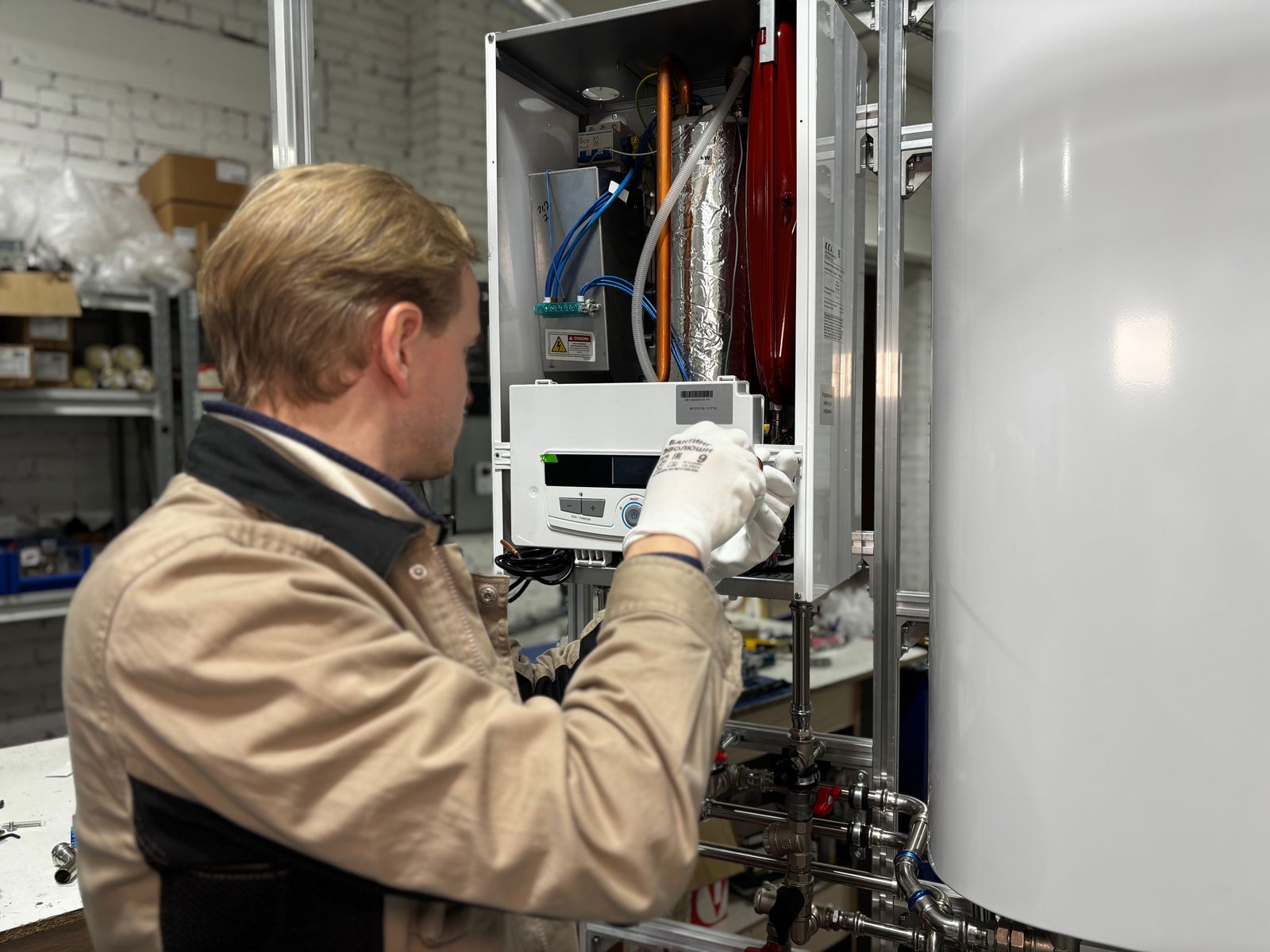
- Find your heater type. A gas heater has a dial on the gas control valve near the bottom of the tank. An electric heater has one or two thermostats behind metal panels on the side. A tankless heater usually has a digital control panel.
- For electric heaters, turn off the power first. Switch off the water heater’s breaker at your electrical panel before you remove any panel. Never touch the wires. If your heater has two thermostats, set both to the same temperature.
- Turn the dial down a small amount. Many gas dials say “Warm,” “Hot” or “Very Hot” instead of numbers, so lower it a notch or two from where it is now. On electric thermostats, use the screwdriver to turn the setting toward 120°F. Leave the gas line and pilot alone.
- Put the panels and insulation back, then turn the breaker back on. Tankless owners can simply enter 120°F on the control panel.
- Wait at least a few hours, or until the next morning, so the tank can adjust.
- Measure again at the same far tap. If the water is still above about 120°F, lower the dial a little more and test again. Repeat until it is right.
- Mark the final setting with tape and a marker so anyone in your home can see it.
Common mistakes to avoid
- Opening an electric heater’s panel with the power still on. Always shut off the breaker first.
- Trusting the dial labels. Dials are often off by several degrees, so the thermometer reading is what counts.
- Forcing an old, stuck or corroded valve. If a dial won’t turn easily, or you see leaks or rust, stop and call a licensed plumber.
- Testing right away. The water in the pipes and tank needs hours to change temperature.
Frequently asked questions
Is 120°F hot enough to kill bacteria?
The Department of Energy says 120°F is enough for most households. If someone in your home has a weakened immune system, ask your doctor or a plumber what setting fits your family best.
How much money does turning down a water heater save?
It depends on how much hot water you use and how high your heater was set. DOE estimates that dropping from 140°F can save about 36 to 61 dollars a year in standby heat loss alone, with more savings from the hot water you use every day.
Will my dishwasher still clean well at 120°F?
Many newer dishwashers have a built-in heater that boosts the water temperature during the wash. Check your dishwasher’s manual. If it needs hotter water, a plumber can help you find the right balance.
Do I need to adjust a tankless water heater?
Tankless heaters only heat water when you turn on a tap, so there is no tank to keep hot. Setting one to 120°F still lowers energy use and scald risk, and it only takes a few button presses.
See your home energy impact
Want to know how your water heater compares with your fridge, lights and heating? Try our free Home Energy Simulator to see where your home’s energy goes and which changes save the most.
Related guides
- How to Install a $25 Programmable Thermostat (and Skip the $250 Smart One)
- How to Choose a Front-Load Washer Over Top-Load for Efficiency
- How to Use a Shower Timer to Build a Shorter-Shower Habit
Sources
- U.S. Department of Energy, Do-It-Yourself Savings Project: Lower Water Heating Temperature
Written and reviewed by the Accessible Sustainability Alliance editorial team. Last updated October 5, 2026.