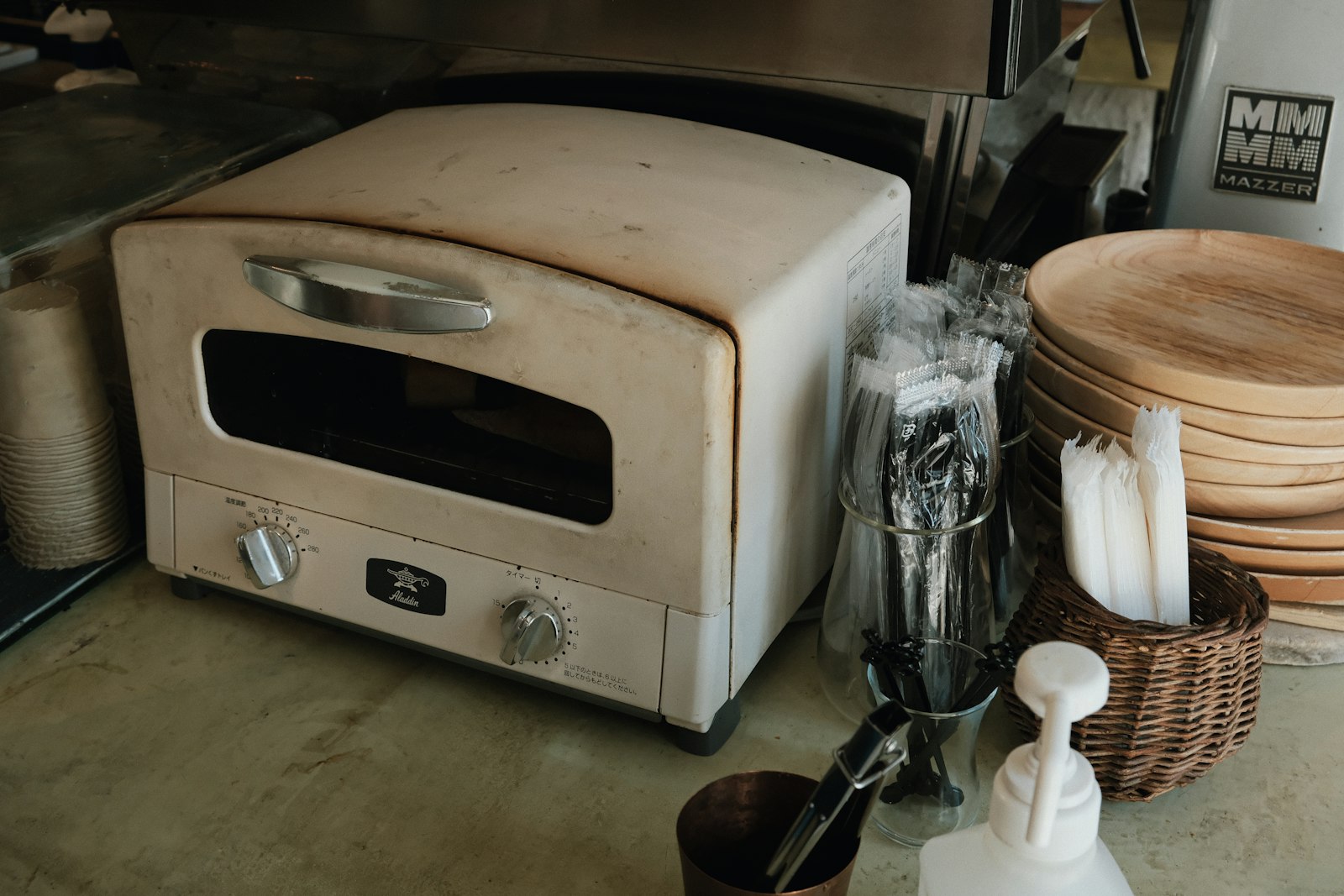
A toaster oven can handle most small meals, like reheated pizza, roasted vegetables or a few baked potatoes, without heating up a big oven. It warms up faster, keeps your kitchen cooler and often uses about half the energy. Here is how to make the switch for everyday cooking.
Quick answer: For small meals, cook in a toaster oven instead of the full-size oven. It often uses about half the energy. Lower the recipe temperature by about 25°F, use small pans that fit with space around them, and check food early.
Why a toaster oven saves energy
A full-size oven has a big box of air and metal to heat before your food even starts cooking. A toaster oven has a much smaller space, so it heats up quickly and wastes less heat. North Dakota State University Extension notes that using a toaster oven may use half of the energy of a full-size oven for foods like pizza.
There is a second bonus. Less heat leaks into your kitchen, so in hot weather your air conditioner doesn’t have to fight the oven. In Southern California, many electric plans charge the most from 4 to 9 p.m., right around dinnertime. Using a smaller appliance during those hours can help keep your bill down.
What you need
- A toaster oven big enough for your usual meals (many fit a small pizza or four slices of toast)
- Small pans that fit inside, such as a quarter sheet pan or the tray that came with the oven
- Oven mitts and a heat-safe spot on the counter
- An instant-read food thermometer, if you cook meat
How to cook small meals in a toaster oven
- Pick a safe spot. Place it on a flat, heat-safe counter. Follow the manual for how much space to leave around it, and keep it away from curtains, paper towels and cabinets above.
- Choose the right pan. Use pans that fit with room for air to move. Never let foil or pans touch the heating elements.
- Lower the temperature. Because the heat is close to the food, start about 25°F lower than a recipe says for a regular oven. For example, a 400°F recipe becomes about 375°F.
- Check early. Start checking food a few minutes before the recipe time. Small ovens can cook faster.
- Use the right setting. Use “bake” for casseroles and cookies, “broil” for melting cheese, and “toast” for bread. If yours has a convection fan, it may cook even faster.
- Check doneness. Use a food thermometer for meat and leftovers so food is fully and safely heated.
- Clean the crumb tray. Empty and wipe the crumb tray about once a week. Old crumbs can smoke or even catch fire.
Tips
- Save the big oven for big jobs, like a whole tray of cookies, a turkey or a large casserole.
- Don’t preheat longer than needed. Many toaster ovens are ready in a few minutes.
- Cook two things at once when you can, like vegetables on one rack and garlic bread on another.
- Unplug it or switch it fully off when you are done.
Frequently asked questions
Does a toaster oven use less electricity than a regular oven?
Usually, yes, for small amounts of food. NDSU Extension says a toaster oven may use half the energy of a full-size oven for items like pizza. For big batches that need several rounds, a full-size oven may be more efficient.
Do you need to change cooking times in a toaster oven?
Often a little. Many cooks lower the temperature by about 25°F and start checking a few minutes early. Every model is different, so watch the first few meals closely.
Can you put aluminum foil in a toaster oven?
Many manuals allow foil on the pan, but it should never touch the heating elements or cover the crumb tray. Always follow your toaster oven’s manual.
Can a toaster oven replace a full oven?
For one or two people, it can handle most daily meals. You’ll still want a full oven for large dishes and holiday cooking.
See your food and kitchen impact
How you cook is one part of your food footprint. Try our free Food & Diet Simulator to see how your meals, cooking and food waste add up, and which kitchen swaps make the biggest difference.
Related guides
- How to Cook Faster and Waste Less Heat with an Induction Cooktop
- How to Use a Free App to Turn Leftovers into Meal Plans
- How to Brew Coffee with a French Press Instead of a Pod Machine
Sources
- North Dakota State University Extension, Prairie Fare: Using Smaller Appliances May Save You Some Cash
Written and reviewed by the Accessible Sustainability Alliance editorial team. Last updated October 5, 2026.