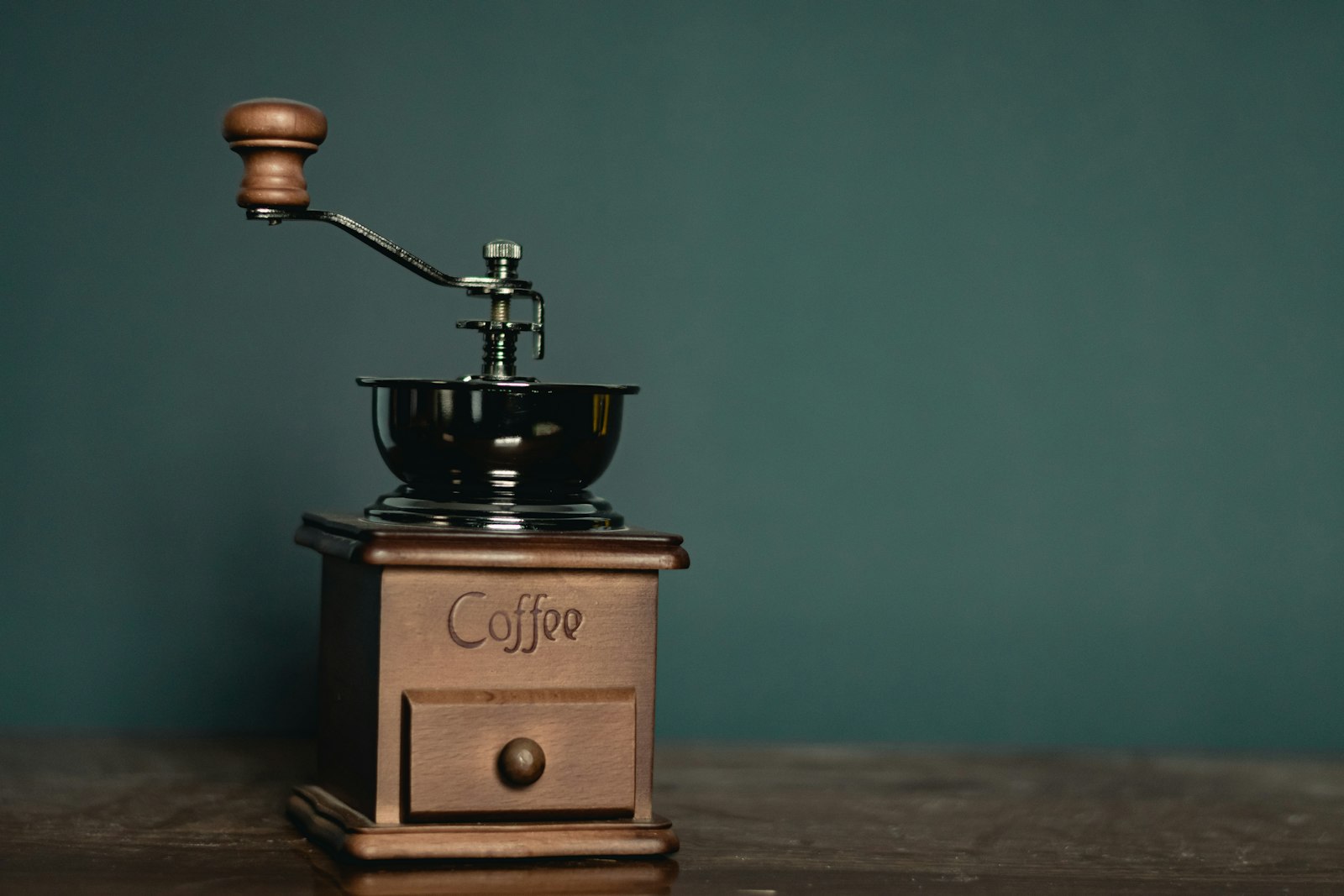
A manual coffee grinder lets you grind fresh beans with nothing but a hand crank. It is quiet, needs no outlet, lasts for years and lets you grind exactly what you need for each cup. Once you set the grind size, it takes about a minute or two per mug.
Quick answer: Measure your beans, set the burr grinder to the right size for your brewer (coarse for French press, medium for drip, fine for espresso), pour the beans into the hopper, and turn the handle at a steady pace until it spins freely. Then brew right away.
Why grinding by hand is a smart habit
Coffee has a big footprint for a drink. Data from Our World in Data, based on a large study of food systems, puts coffee at about 28.5 kg of greenhouse gases per kilogram of beans, higher than many foods, including pork and chicken (Our World in Data). Most of that comes from growing and processing the beans, not from your grinder.
So the biggest win is not wasting coffee. When you grind by hand, you measure and grind only what you will brew, and whole beans stay fresh longer than pre-ground coffee. A hand grinder also skips one more plug-in gadget, and a sturdy one can last for many years with simple care.
What you need
- A manual burr grinder (ceramic or steel burrs), not a blade grinder
- Whole coffee beans
- A kitchen scale or measuring spoon
- A small brush for cleaning
- Your brewer, such as a French press, pour-over cone or moka pot
How to grind coffee with a manual grinder
- Measure the beans. A common starting point is about 1 to 2 tablespoons of beans (roughly 7–10 grams) per 6 ounces of water. Adjust to taste.
- Set the grind size. Turn the adjustment knob or nut to move the burrs closer (finer) or farther apart (coarser). Coarse grounds look like sea salt for a French press. Medium grounds look like sand for drip or pour-over. Fine grounds feel like flour for espresso.
- Fill the hopper. Pour in only the beans you just measured. Do not overfill, or the lid may not fit.
- Hold it steady. Grip the body firmly in one hand, or brace it against your chest or the counter. Some grinders have a rubber base or a handle that sits on a table.
- Crank at an even pace. Turn the handle smoothly, about one turn per second. You will hear crunching at first, then it gets quieter.
- Stop when it spins freely. When the handle turns with no resistance, all the beans are ground. Open the catch cup carefully, since fine coffee dust can puff out.
- Brew right away. Ground coffee loses aroma fast, so brew within a few minutes for the best flavor.
Tips for a better grind
- Test and adjust. If coffee tastes sour or weak, grind finer. If it tastes bitter or harsh, grind coarser.
- Clean it dry. Brush out old grounds after each use. Avoid washing the burrs unless the maker says it’s okay, and dry them fully if you do.
- Store beans well. Keep whole beans in an airtight container away from heat and light, and buy amounts you will use within a few weeks.
- Compost the grounds. Used grounds can go in your compost pile, worm bin or, in California, your green organics bin.
Frequently asked questions
Is a manual grinder better than an electric one?
For a few cups a day, a good manual burr grinder can make grounds just as even as an electric burr grinder for much less money. Electric grinders are faster for large batches or very fine espresso grinds.
How long does it take to grind coffee by hand?
For one mug of medium-ground coffee, it usually takes about 30 seconds to 1 minute. Finer grinds for espresso take longer and need more effort.
Can I grind coffee without a grinder at all?
In a pinch, you can crush beans in a mortar and pestle or with a rolling pin in a sealed bag. The grounds will be uneven, so a French press or cold brew handles them best.
Why use a burr grinder instead of a blade grinder?
Burrs crush beans to an even size, while blades chop them into a mix of dust and chunks. Even grounds brew more evenly and taste better.
See your food impact
Want to see how coffee, meals and food waste add up for your household? Try our free Food & Diet Simulator to find which food choices cut the most carbon.
Related guides
- How to Brew Coffee with a French Press Instead of a Pod Machine
- How to Switch to Reusable Coffee Filters for $4
- How to Start a Worm Bin for Composting in Small Spaces
Sources
- Our World in Data, Greenhouse gas emissions per kilogram of food product (Poore and Nemecek, 2018)
- CalRecycle, SB 1383 organic waste rules
Written and reviewed by the Accessible Sustainability Alliance editorial team. Last updated October 5, 2026.