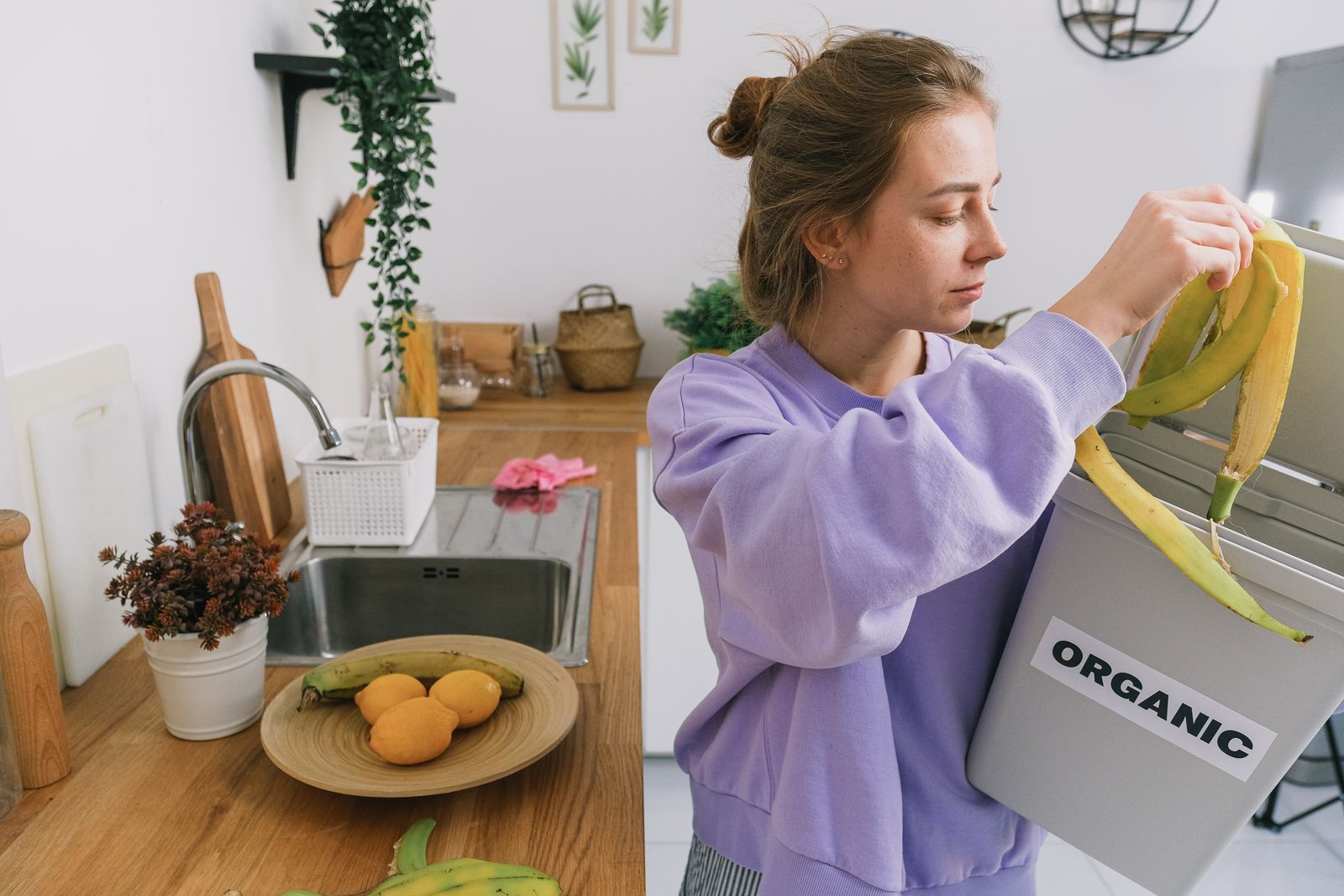
A countertop compost bin lets you collect food scraps in even the smallest kitchen. With a lid, a little dry paper and a plan for emptying it, you can keep scraps out of the trash without smells or bugs.
Quick answer: Choose a small bin with a tight lid, line the bottom with shredded paper, add fruit and vegetable scraps and coffee grounds, cover wet scraps with dry browns, and empty it every few days into your green bin, a community drop-off or a garden compost pile.
Why compost in a small apartment?
Food scraps are one of the biggest things we throw away. The EPA reports that in 2019, about 66 million tons of wasted food came from homes, grocery stores and restaurants, and about 60 percent of it went to landfills. Only about 5 percent was composted (EPA).
In a landfill, food rots without air and makes methane, a powerful climate pollutant. CalRecycle says landfills produce about 20 percent of California’s methane. That is why California’s SB 1383 law set a goal of sending 75 percent less organic waste to landfills, and why many California cities now accept food scraps in the green organics bin (CalRecycle).
What you need
- A countertop bin with a tight lid, about 1 to 2 gallons (stainless steel, ceramic or a reused container with a lid)
- A charcoal filter for the lid (optional, helps with odors)
- Browns: shredded newspaper, plain cardboard, paper egg cartons or dry leaves
- A place to empty it: your green bin, a community compost drop-off, a garden or a worm bin
How to set up a countertop compost bin
- Pick a small bin with a lid. A smaller bin fills faster, so you empty it before it smells.
- Place it where you prep food, such as next to the sink or cutting board. If it is easy to reach, you will actually use it.
- Add about 2 inches of shredded paper or cardboard to the bottom. This soaks up moisture.
- Add greens: fruit and vegetable scraps, coffee grounds, paper filters, paper tea bags and crushed eggshells.
- Cover each wet layer with a handful of dry browns. This is the simple trick that stops most smells and fruit flies.
- Keep out meat, fish, bones, dairy, oils and greasy food, plus pet waste, glossy paper, produce stickers and dryer lint.
- Empty the bin every 3 to 5 days, or sooner in hot weather. Rinse it and add fresh paper to the bottom.
- Take scraps where they will be composted. In many California cities, food scraps can go straight into the green bin. Check your city’s rules, or find a community garden or farmers market drop-off.
Common mistakes to avoid
- Too many wet scraps. If it looks soggy or smells sour, add more shredded paper. Aim for the feel of a damp, wrung-out sponge.
- Letting it sit too long. A small bin is a collection bin, not a full compost pile, so empty it often.
- Leaving the lid open. Fruit flies find open scraps fast.
- Ignoring gnats. Freeze scraps for a day before adding them, and cover each layer with browns.
Frequently asked questions
Does a countertop compost bin smell?
It should not if you keep the lid closed, cover wet scraps with paper and empty it every few days. A charcoal filter in the lid also helps.
Can I compost in an apartment without a yard?
Yes. Use the countertop bin to collect scraps, then take them to your green bin, a community drop-off or a garden. If you want to make finished compost indoors, a worm bin is a good small-space option.
What can’t go in a countertop compost bin?
The EPA advises keeping meat, fish, bones, dairy, fats, oils and grease out of home compost. Also skip pet waste, glossy paper, produce stickers and dryer lint. Your city green bin may accept more, so check local rules.
How do I get rid of fruit flies in my compost bin?
Empty and rinse the bin, then keep the lid shut and cover every layer of scraps with dry paper. Freezing scraps before adding them helps kill eggs on fruit peels.
See your food impact
Composting is one step toward a lower-waste kitchen. Try our free Food & Diet Simulator to see your household’s food footprint and which changes make the biggest difference.
Related guides
- How to Find a Community Compost Drop-Off Near You
- How to Start a Worm Bin for Composting in Small Spaces
- How to Make Zero-Waste Vegetable Broth from Scraps
Sources
- U.S. Environmental Protection Agency, Food: Material-Specific Data
- U.S. Environmental Protection Agency, Composting at Home
- CalRecycle, SB 1383 organic waste rules
Written and reviewed by the Accessible Sustainability Alliance editorial team. Last updated October 5, 2026.