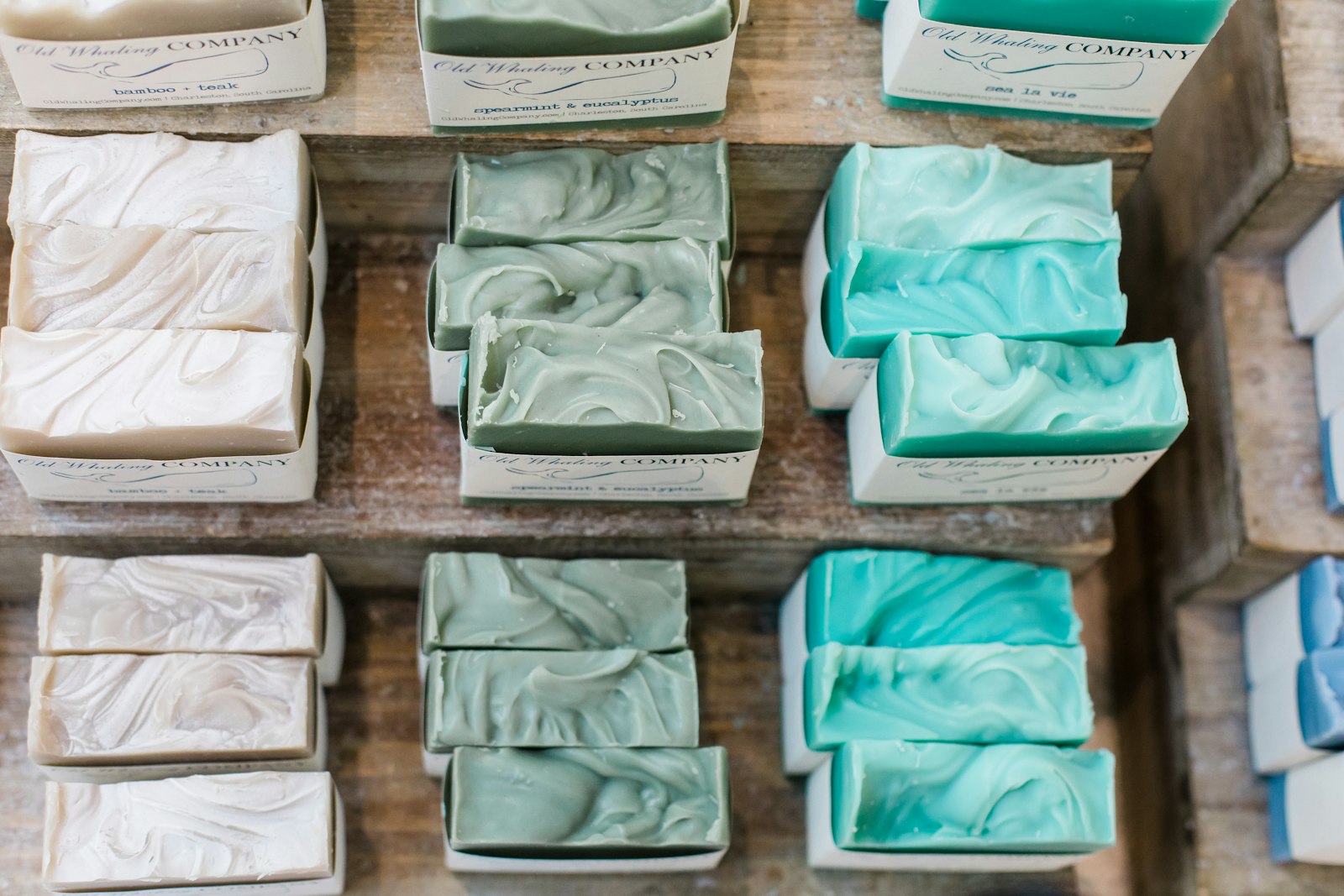
Liquid soap, body wash and shampoo come in plastic bottles that pile up fast. Bar soap and shampoo bars do the same job with little or no plastic, and they often last longer than you would expect. Switching is easy if you go one product at a time and give your hair a couple of weeks to adjust.
Quick answer: Finish the bottles you have, then replace them one at a time with a bar soap and a shampoo bar. Keep each bar on a draining soap dish out of the shower spray, and give your hair one to two weeks to adjust to the new shampoo.
Why switch to bar soap?
Bottles add up. EPA reports that the United States generated 35.7 million tons of plastic in 2018, and only about 8.7 percent of it was recycled (EPA). Every bar you use is one less plastic bottle and pump.
There is a carbon benefit too. McGill University’s Office for Science and Society explains that liquid soap is mostly water, so it is heavier to ship, and that calculations show its carbon footprint is about 25% greater than bar soap. People also tend to use much more liquid soap per hand wash, about 2.3 grams compared with about 0.35 grams of bar soap (McGill OSS). One tradeoff: people may use a bit more hot water with bar soap, so keep showers short.
What you need
- A bar soap for hands and body. Choose an unscented or gentle bar if your skin is sensitive.
- A shampoo bar made for your hair type. Conditioner bars are available too.
- A self-draining soap dish or a small soap saver bag for each bar
- Optional: a small tin for travel
How to switch from bottled soap to bars
- Use up the bottles you already have. Throwing out half-full bottles wastes the product and the plastic.
- Start with hand soap at the sink. It is the easiest swap, and you will see how long a bar lasts.
- Replace body wash with a bar soap in the shower next. Rub the bar on your hands or a washcloth to make lather.
- Switch to a shampoo bar. Wet your hair well, rub the bar between your hands or glide it over your scalp a few times, then massage and rinse fully.
- Give your hair one to two weeks to adjust. It may feel different at first. A thorough rinse and a conditioner bar help.
- Set every bar on a draining dish placed away from direct shower spray, so it dries between uses.
- Recycle or reuse the empty bottles. Clean pump bottles can hold homemade cleaners or be refilled.
- Buy bars with paper or no packaging when you can, and look for refill or bulk options at local stores.
Common mistakes to avoid
- Leaving bars in a puddle. A wet bar turns mushy and wears away fast. Drainage is everything.
- Quitting after one wash. Hair often needs a little time to get used to a new product.
- Choosing a harsh bar. Traditional soap is alkaline and can feel drying for some people. If your skin feels tight, try a bar labeled gentle, moisturizing or soap-free.
- Ignoring hard water. True soap can leave a film in hard water. If your hair feels waxy, try a different shampoo bar formula or a vinegar rinse.
Frequently asked questions
Is bar soap as clean as liquid soap?
Yes. Both remove germs when you scrub for about 20 seconds and rinse. McGill’s Office for Science and Society describes a study in which people washed with a bar of soap laced with bacteria, and no bacteria could be detected on their hands afterward.
How long does a shampoo bar last?
It depends on your hair length and how often you wash, but a bar that dries between uses often lasts longer than one bottle of shampoo. Keeping it dry is the biggest factor.
Do shampoo bars work on all hair types?
Most hair types can use shampoo bars, but formulas vary a lot. If one bar leaves your hair dull or heavy, try another made for your hair type before giving up.
Is bar soap cheaper than liquid soap?
Often, yes. McGill’s Office for Science and Society says it can cost about ten times as much to wash your hands with liquid soap as with bar soap, mainly because people use so much more of it.
See your waste impact
Bathroom bottles are one of many sources of plastic waste at home. Try our free Household Waste Simulator to see how much your household throws away and which swaps help most.
Related guides
- How to Switch to Refillable Glass Spray Bottles for Cleaning
- How to Switch to Concentrated Cleaning Tablets
- How to Switch to Reusable Produce Bags at the Grocery Store
Sources
- McGill University Office for Science and Society, Liquid or Bar? Soapy Tales
- U.S. EPA, Plastics: Material-Specific Data
Written and reviewed by the Accessible Sustainability Alliance editorial team. Last updated October 5, 2026.