
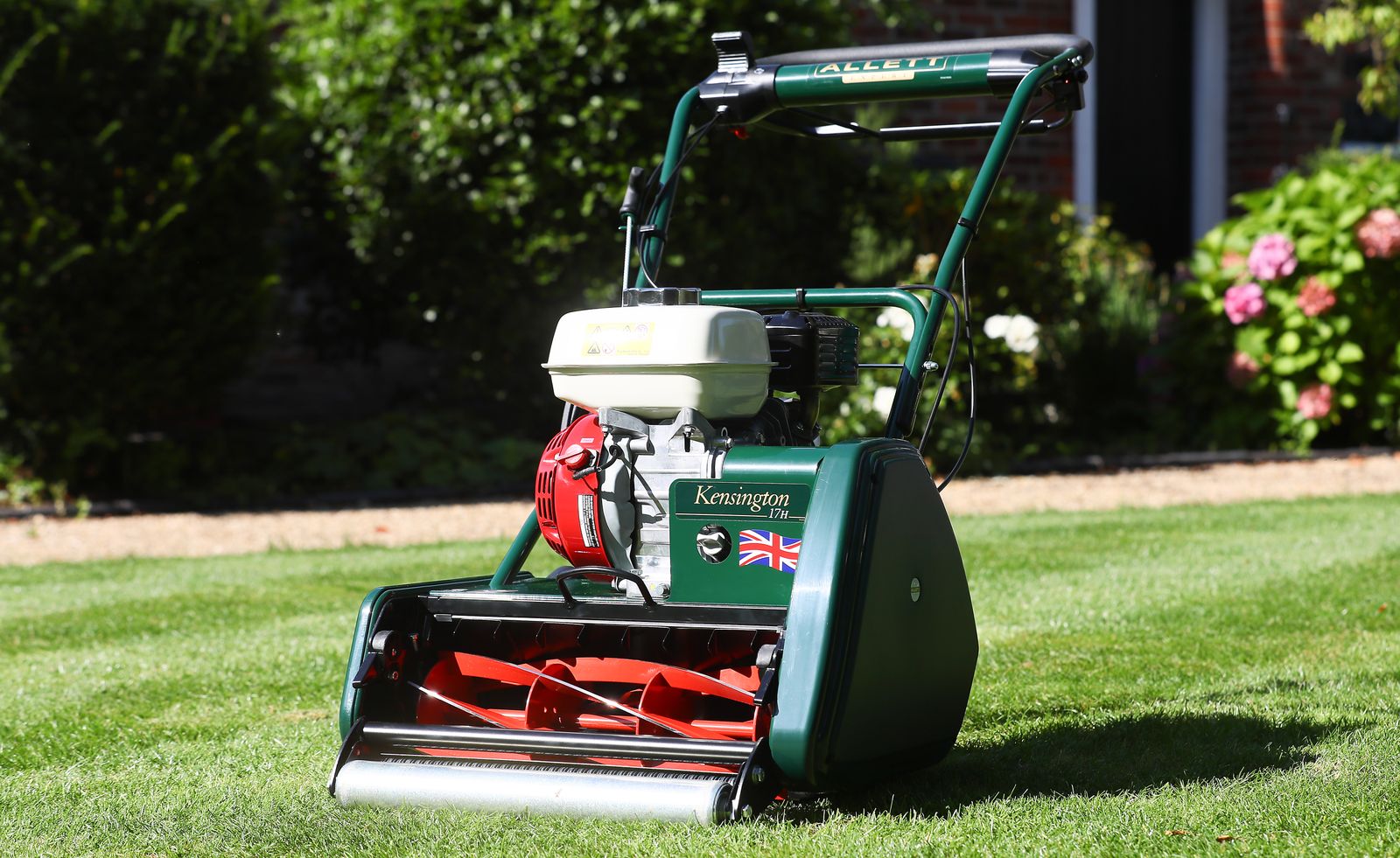
A push reel mower cuts grass with a spinning set of blades that work like scissors. It needs no gas, no oil and no plug, so it is quiet, clean and cheap to run. With a little prep, it can keep a small or medium lawn looking neat all season.
Quick answer: To mow gas-free with a push reel mower, clear sticks and stones first, set the cutting height to about 2–3 inches, and push at a steady walking pace in straight rows that overlap by a few inches. Mow often, before the grass gets too tall, and wipe the blades clean after each use.
Why switching to a reel mower matters
Small gas engines pollute far more than most people expect. The California Air Resources Board says that running a commercial gas lawn mower for one hour emits as much smog-forming pollution as driving a new passenger car about 300 miles, roughly the trip from Los Angeles to Las Vegas (CARB). Home mowers are smaller, but they still burn gas and puff out fumes right where you breathe.
A reel mower runs on your own muscle power. There is no exhaust, no gas can to store in the garage and no engine noise to bother neighbors early in the morning. California has also set a goal of moving off-road equipment like this to zero emissions by 2035 where it is possible, so going gas-free now puts your household ahead of the curve.
What you need
- A push reel mower. Wider models (about 16–20 inches) cover ground faster; lighter ones are easier to push.
- Work gloves and closed-toe shoes.
- A stiff brush or old rag for cleaning the blades.
- A light lubricant or silicone spray to keep moving parts from rusting.
- Optional: a sharpening kit or a local shop that sharpens reel blades.
How to mow your lawn with a push reel mower
- Walk the lawn first. Pick up sticks, pinecones, stones and toys. Reel blades are close together, so even a small twig can jam them, and a rock can nick the blade edge.
- Check the grass height. Reel mowers work best on grass that is not too tall. If your grass is well over about 4 inches, mow it in two passes: first at the highest setting, then a few days later at your normal height.
- Set the cutting height. Use the lever or knobs near the wheels. Many lawns do well at about 2–3 inches, but the right height depends on your grass type. Try not to cut off more than about one-third of the blade at a time.
- Mow when the grass is dry. Wet grass bends over and clumps on the blades instead of getting a clean cut.
- Push at a steady walking pace. The reel spins only when the wheels turn. Going too slowly can leave uncut blades, and going very fast can skip spots. A normal walk usually works best.
- Overlap your rows. Mow in straight lines and let each pass overlap the last one by a few inches so you don’t leave a strip of tall grass between rows.
- Change direction now and then. Mowing in a different pattern each time helps the grass stand up straight and keeps ruts from forming.
- Clean up after mowing. Brush grass clippings off the reel and bed knife, wipe the blades dry and add a light coat of lubricant before storing the mower somewhere dry.
Tips for a better cut
- Mow more often. Reel mowers do their best work on a lawn that is cut about once a week in the growing season.
- Leave the clippings. Short clippings break down fast and return nutrients to the soil, so you can skip bagging.
- Keep blades sharp. If the mower starts chewing or folding grass instead of snipping it, adjust the reel so it lightly touches the bed knife, or have the blades sharpened.
- Watch your feet. The blades are not powered, but they are still sharp. Keep feet and hands away from the reel, and never pull the mower backward toward your toes.
Frequently asked questions
Are reel mowers good for big lawns?
Reel mowers are best for small to medium lawns. On a large yard they still work, but mowing takes longer and more effort. Many families with big lawns pair a reel mower with a battery-electric mower for the hardest jobs.
Can a reel mower cut tall or thick grass?
Not well. Tall grass tends to get pushed over instead of cut. If your lawn got away from you, mow it in two passes on different days, starting at the highest setting.
How often do reel mower blades need sharpening?
It depends on your lawn and how often you mow, but many owners sharpen once a season or every couple of years. Backlapping kits let you do it at home, or a local mower shop can do it for you.
See your household’s carbon impact
Want to see how lawn care, driving and home energy add up? Try our free Household Carbon Simulator to estimate your family’s carbon footprint and test which gas-free swaps make the biggest difference.
Related guides
- How to Rake Leaves with a Push Broom Instead of a Leaf Blower
- How to Landscape with Native Plants to Cut Water Use
- How to Join a Tool Library Instead of Buying Once-a-Year Tools
Sources
- California Air Resources Board, SORE – Small Engine Fact Sheet
Written and reviewed by the Accessible Sustainability Alliance editorial team. Last updated October 5, 2026.