Our verdict: 8/10. The Elejoy V2H is the first vehicle-to-home system we’ve used that turns an ordinary Tesla into a whole-home backup power alternative without a Powerwall, a new car, or a five-figure install. It carried our entire house overnight and through a real outage on October 17, 2026. Buggy monitoring software, a manual-only switchover, and no way to plug it into an existing solar inverter keep it from a 9 or better.
We’ve been testing the Elejoy V2H at the Accessible Sustainability Alliance for several months: in routine daytime tests, in multiple overnight runs, and during an actual grid outage. Our test car is a Tesla Model S P85D, one of the oldest Teslas the system can work with. Below is what it did well, where it frustrated us, what other owners and critics are saying, and how it compares to every other way of backing up a house with an EV or a battery today.
Elejoy V2H at a glance
| Price | $2,599 direct from Elejoy (inlet box and 2-meter cable included), plus installation |
| Output | 7 kW continuous, 8 kW surge (30 seconds), 120 V and 240 V split-phase |
| Works with | Tesla Model 3/S/X/Y with CCS support (pre-2019 cars need Tesla’s CCS retrofit) |
| Switchover | Manual, through a transfer switch or interlock |
| Our score | 8/10 today; 9 to 9.5 with inverter integration and stable software |
What we liked
- A true V2H system you can buy and install now, not a waitlist or a Kickstarter promise
- Installation instructions thorough enough for an electrician to finish in one day
- Responsive, diligent support staff
- Ran our whole house, including two refrigerators and induction cooking
What needs work
- Monitoring app and front panel lose track of the car’s battery state
- No historical usage or battery logs we could rely on
- Manual switchover only
- No support for feeding a hybrid solar inverter, like our Sol-Ark, as a generator input
What the Elejoy V2H is and how it works
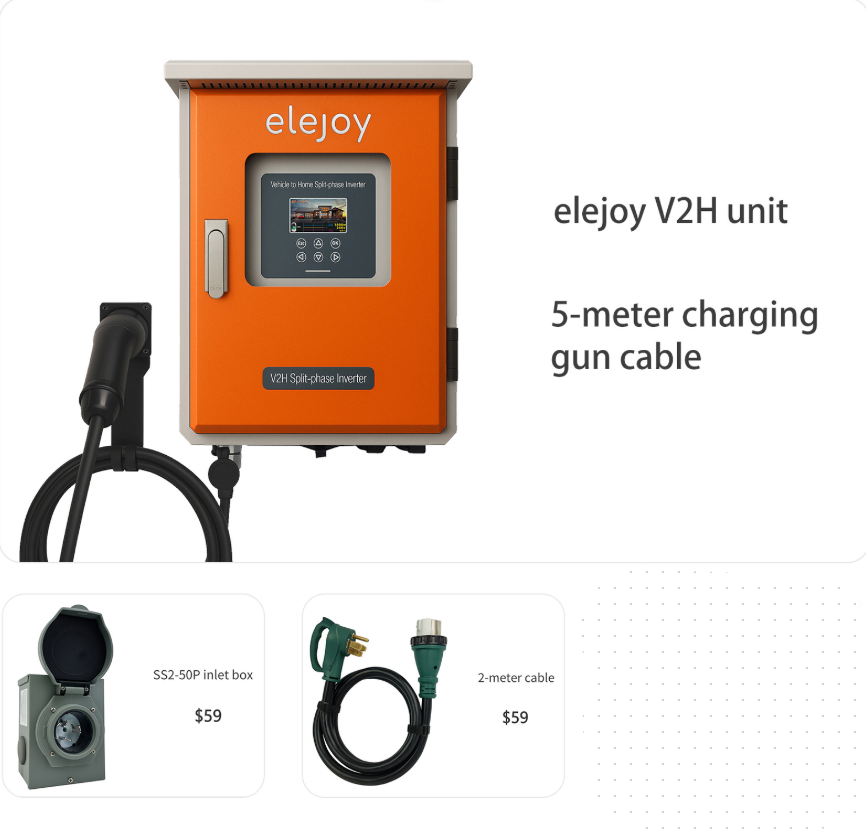
The Elejoy V2H is a split-phase inverter that draws DC power straight out of a Tesla’s battery through the charge port and converts it to household AC. It plugs in the way a DC fast charger does: it talks to the car over the CCS protocol, puts the car into charging mode, then pulls energy out instead of pushing it in (Elejoy).
That approach is the whole point. Tesla’s own home-backup feature, Powershare, has only just reached the Model 3 and Model Y. It covers new orders placed on or after October 1, 2026 and requires a Powerwall 3 (Not a Tesla App). Elejoy sidesteps Tesla entirely. It works with Model 3, S, X and Y cars that support CCS and third-party NACS DC charging. Teslas built before May 2019 need Tesla’s CCS upgrade first.
Key specs and terms:
- Power: 7 kW continuous and 8 kW for up to 30 seconds, at 120 V and 240 V simultaneously (BackerCrew). Elejoy’s product page also headlines “8 kW of continuous power,” so plan around the more conservative 7 kW figure.
- Efficiency: Elejoy claims up to 97% conversion.
- Direction: One-way only, car to home. It cannot charge the car or export to the grid.
- App: Real-time EV data, usage logs, a minimum state-of-charge cutoff, and over-the-air updates.
- Safety documentation: Elejoy has published EMC and UL 1741 test reports.
- Price: $2,599, against a listed regular price of $3,399. It now ships with an SS2-50P outdoor inlet box and a 2-meter NEMA 14-50 cable included, which previously cost $59 each (Elejoy store).
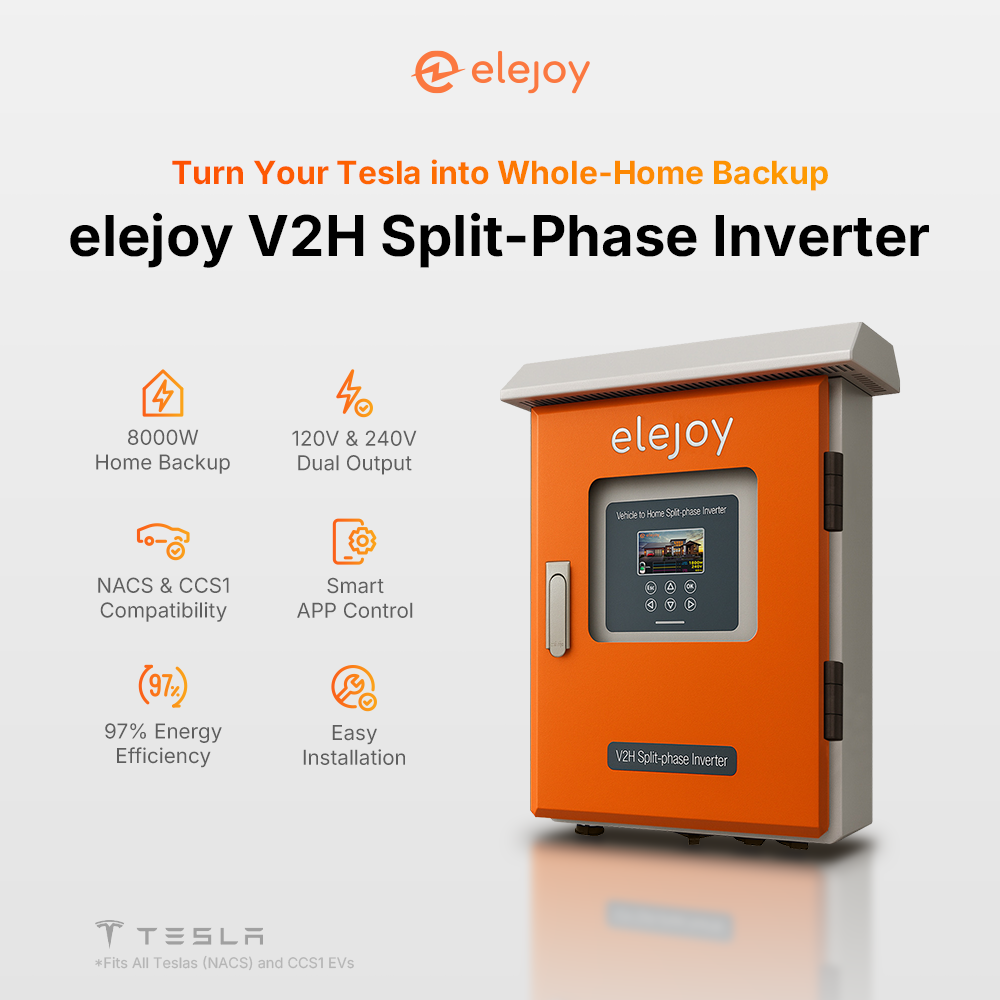
The product started on Kickstarter, where 46 backers pledged $73,117 against a $20,000 goal (Kickstarter). That is a small early-adopter base, which matters when you weigh the software issues below.
Our setup and installation
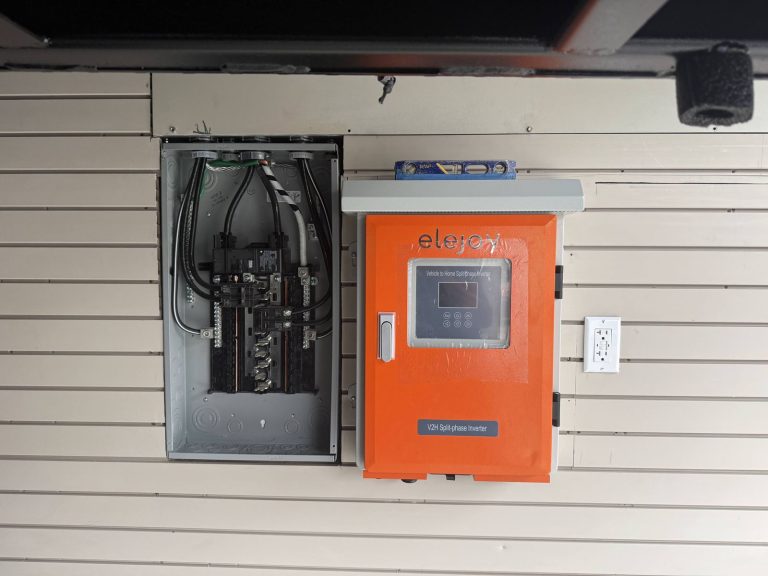
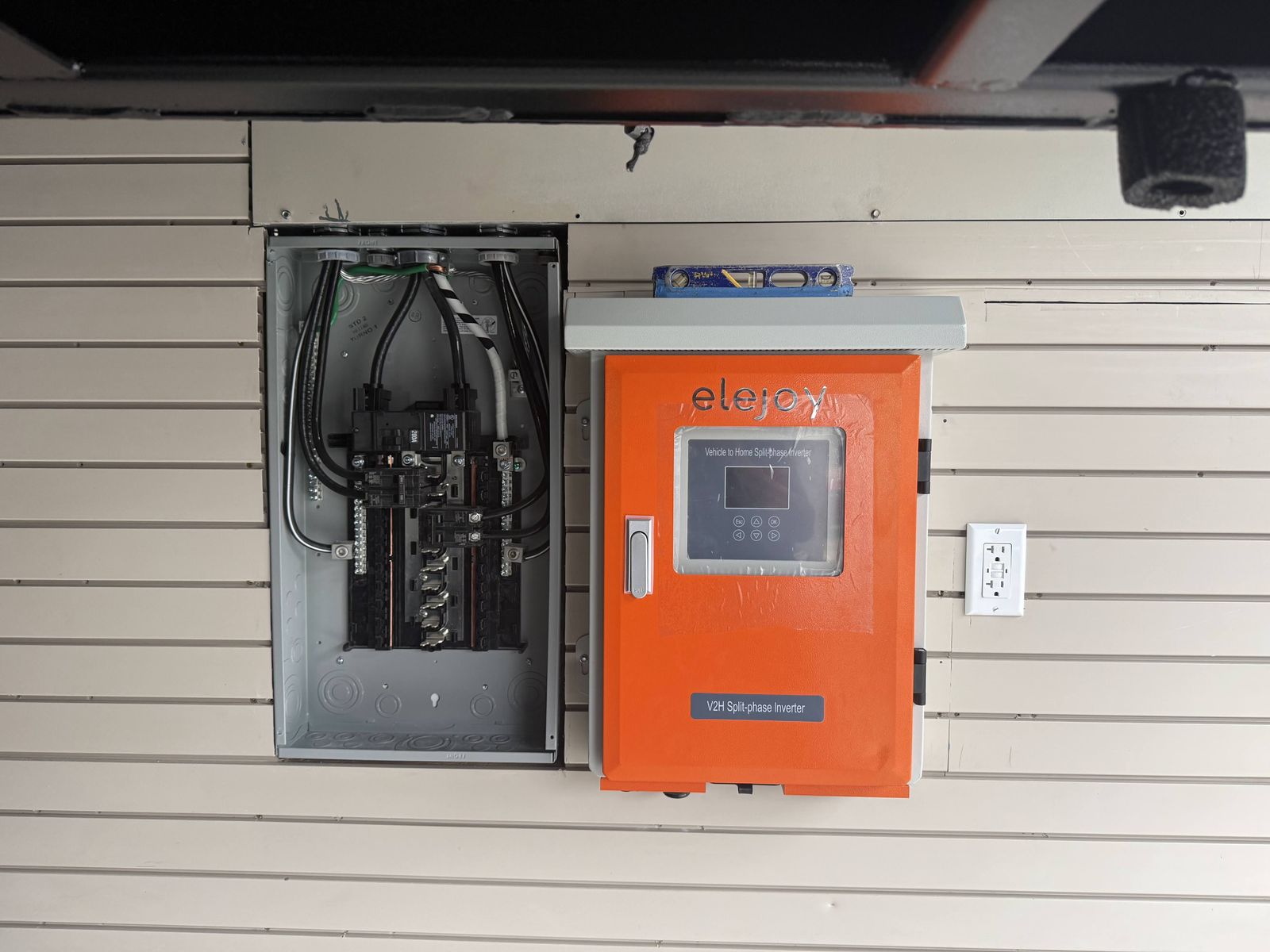
We purchased the Elejoy V2H directly from Elejoy’s website at the standard retail price; it was not a review sample, and Elejoy did not see this review before publication. A licensed electrician installed it in a single day, wiring it into the home through a manual transfer switch.
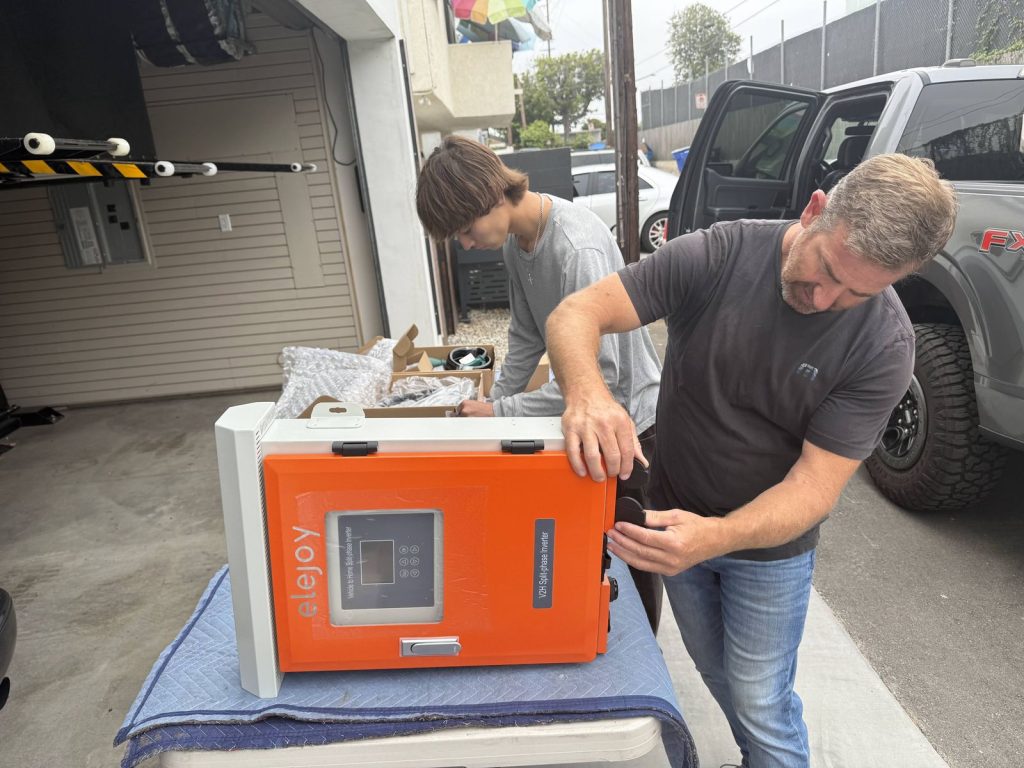
The installation guide is one of the product’s quiet strengths. It’s simple, thorough, well illustrated, and specific about wiring the inverter to the home’s panel through a transfer switch. Our electrician had few questions that the documentation didn’t already answer.
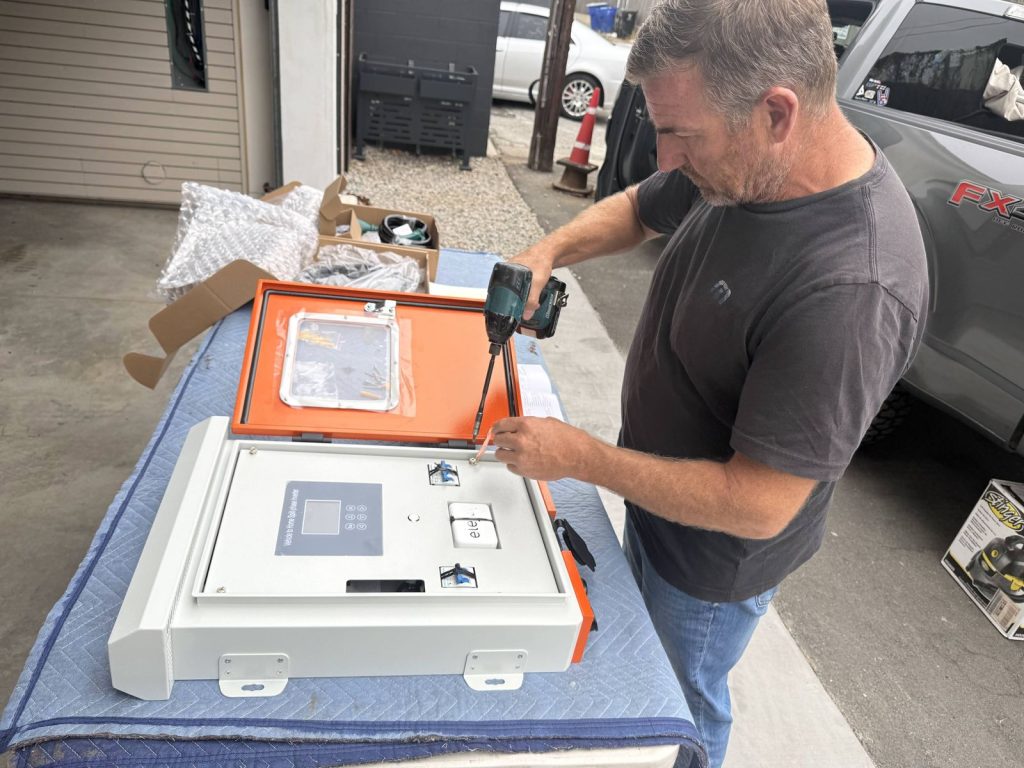
In our jurisdiction the installation was treated like a portable-generator hookup and did not require a permit. Rules differ by city and utility, so check locally before you assume the same.
Our test vehicle is a Tesla Model S P85D. Because it predates Elejoy’s May 2019 cutoff, it required Tesla’s CCS retrofit before the Elejoy could talk to it, and ours has that upgrade. If you own a pre-2019 Model S or X, get the retrofit done first; it’s a prerequisite, not an option. Owners of later Model 3 and Model Y cars or other vehicles with the NACS standard can skip this step.
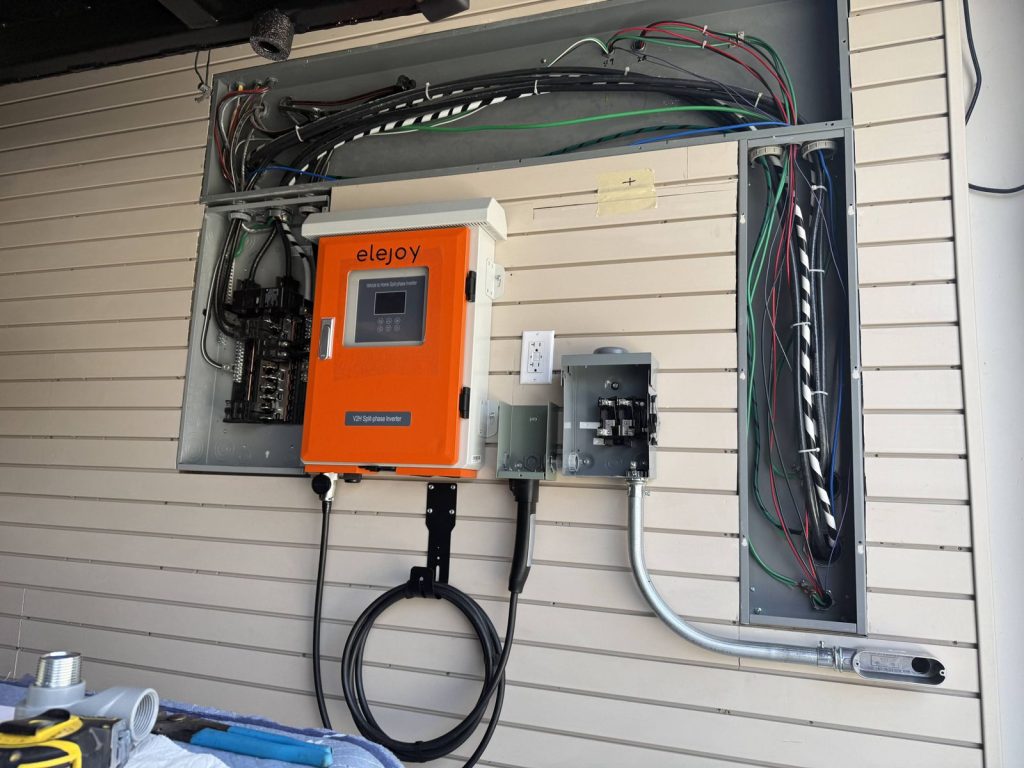
The circuits we backed up were effectively the whole house: two refrigerators, a microwave, an induction cooktop and electric oven, lighting, and fans.
Real-world performance: it does what it claims
The core job, keeping a house running off a car, is where the Elejoy V2H earns its score. Across our overnight tests it carried the full house load without tripping, sagging, or shutting down.
In a typical overnight run the house drew about 15 kWh over 10 hours, an average of roughly 1.5 kW. That’s refrigerators cycling, lights, fans, and some evening cooking. We started that night at 60% state of charge. A P85D pack holds about 77 kWh of usable energy when new, so 15 kWh is roughly 19 to 20 percentage points, which left the car at about 40% by morning. That is still well over 100 miles of range for the next day’s driving. Even starting from 60%, the car could have carried the house for about two nights before dipping below a 20% reserve. From a full charge, it’s closer to four nights. Want to estimate your own home’s daily use? Try our Home Energy Simulator.
The unit also handled the stiffer loads well. Induction cooking and the oven are among the hungriest appliances in a home, and the inverter kept voltage steady through them. We used the microwave regularly during testing but never ran it at the same time as the induction cooktop, and we didn’t hit the limit. With a 7 kW continuous rating, staggering big loads like this is a sensible habit. Running the cooktop, oven, and microwave at full tilt together could approach the ceiling.
The October 17, 2026 outage. This is the test that matters. When the grid went down, we threw the transfer switch, connected the car, and the house came back up on Elejoy power. The outage lasted about six hours. At our measured burn rate of about 1.5 kW, that works out to roughly 9 kWh, or about 12% of the pack. That’s our estimate; daytime cooking pushes the real number somewhat higher. Refrigerators stayed cold, the kitchen stayed usable, and the house felt normal.
It was not seamless. Because our switchover is manual, someone had to walk to the panel and make the physical switchover. That’s the gap between the Elejoy and automatic systems from Ford, GM, Tesla, and EcoFlow, and we cover it next.
Where it falls short
The hardware is solid; the software and integration story are not there yet. Three issues cost the Elejoy its higher score.
1. Monitoring that loses track of the car
Our biggest day-to-day frustration was data accuracy. Partway through several sessions, both the Elejoy front panel and the Elejoy app stopped reporting the car’s actual battery state. They no longer recognized the active discharge, so the readout froze or went blank while power kept flowing.
The inverter kept running, so this isn’t a safety failure. But when you’re living off a finite battery during an outage, the remaining-energy number is the one you check most. We ended up monitoring discharge rate and state of charge in the Tesla app instead. That works, but it defeats the point of a dedicated monitoring app.
The app also lacks historical tracking we could trust. Elejoy markets usage logs, but we couldn’t build a reliable record of energy used per session or battery trends over time. For anyone trying to size backup capacity or evaluate time-of-use savings, that history matters.
2. Manual switchover only
Our installation uses a manual transfer switch, so every outage begins with a blackout and a trip to the panel. For a household that’s home and awake, it’s a minor inconvenience. For an overnight outage, a family away from home, or anyone with medical or refrigeration-sensitive needs, it’s a real limitation. Competing systems from Ford, GM, and EcoFlow switch automatically, some in under 20 milliseconds. We’d like Elejoy to offer an automatic transfer option or a certified pairing with one.
3. No integration with an existing solar inverter
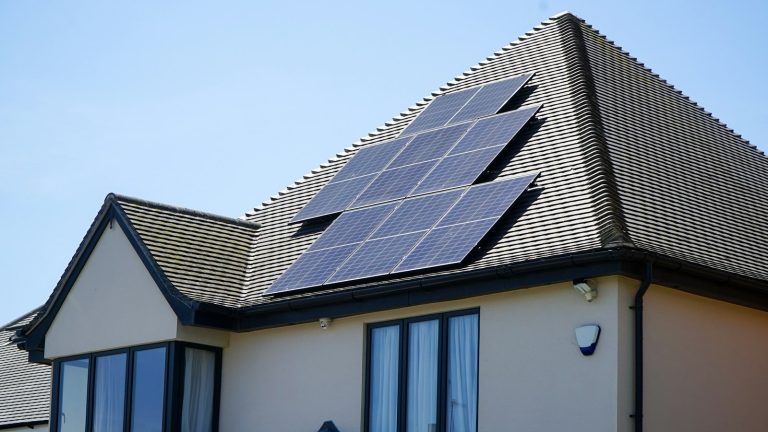
This is the gap that would have saved us the most work. Our home already has a Sol-Ark hybrid inverter and battery bank (here’s how a home battery bank pairs with solar). The obvious design is to feed the Elejoy into the Sol-Ark’s generator input. The Sol-Ark would then treat the car as a generator, recharging the home battery and managing loads automatically.
We didn’t attempt it, because Elejoy told us the V2H doesn’t support this type of integration, and the company doesn’t advertise compatibility with hybrid-inverter generator inputs. So the car and the home battery run as two separate systems, and we decide by hand which one powers the house.
For the growing number of homes that already have solar and storage, this is the feature that would turn the Elejoy from a clever backup into a true extension of the home energy system. It’s one of the main reasons our score is 8 and not 9.5.
Support and firmware
Elejoy’s support team was a bright spot. When we reported the monitoring problems, they responded promptly, asked useful follow-up questions, and stayed on the issue rather than closing it with a canned answer. For a small company shipping a first-generation product, that matters as much as the spec sheet.
They also sent us a firmware update aimed at the reporting issues. We have not tested it thoroughly enough to say whether it fixes them, and we’ll update this review when we have. The underlying point holds either way: the hardware is ahead of the software, and Elejoy appears to know it.
What other owners and critics are saying
Public feedback on the Elejoy V2H is still thin, which is expected for a product with a few dozen Kickstarter backers. What exists lines up closely with our experience.
The positive reports focus on capability. A YouTube creator documented running an entire home off-grid from the Elejoy (YouTube). On a pilots’ forum, one member said a friend now powers his whole house from his Tesla. After a firmware update, the friend’s unit also worked with his Chevy Bolt (Pilots of America). That suggests Elejoy’s compatibility list may be broader than its marketing, though we haven’t verified non-Tesla support.
The skepticism focuses on certification and warranty. Early in the launch, members of the DIY Solar Forum questioned whether the unit carried safety listings. They also worried that pulling power through the charge port could put a Tesla’s battery warranty at risk (DIY Solar Forum). Another poster asked whether Tesla might push a software update that blocks third-party discharging. Elejoy has since published UL 1741 and EMC test reports, which addresses the first concern. Tesla does not endorse the product, so the warranty and future-update questions remain open. Read your warranty and decide your own comfort level.
Others want more inputs. One commenter on Elejoy’s demo video wished for future models with DC solar and battery inputs and a more modular design (YouTube). That is the same integration gap that keeps our Sol-Ark and the Elejoy running as separate systems.
Independent guides add useful context. A California bidirectional-charging guide notes that Tesla Model S, 3, X and Y are not confirmed for native US home backup. It also points out that V2H only helps when the car is home and plugged in (Cali Energy). That’s the market gap Elejoy fills, and a practical caveat worth remembering. Elejoy’s smaller 3 kW V2L adapter scored 7.0 in one roundup, which flagged its single outlet as a limit on whole-home use (Smart Home Explorer). The V2H is the answer to exactly that limitation.
How it compares to other home backup options
If you already own a compatible Tesla, the Elejoy is the cheapest whole-home backup in this comparison by thousands of dollars. Every automaker V2H system costs more and only works with that automaker’s cars, and most require extra hardware. Hardware prices below exclude installation unless noted.
| System | Hardware price | Backup output | Works with | Switchover |
|---|---|---|---|---|
| Elejoy V2H | $2,599 | 7 kW continuous, 8 kW surge | Tesla 3/S/X/Y with CCS | Manual |
| Tesla Powershare Home Backup | Powerwall 3 required, about $13,500 installed | 11.52 kW | Model 3/Y ordered Oct 1, 2026 or later; Cybertruck | Automatic |
| Ford Charge Station Pro + Home Integration System | $1,310 + $3,895; $8,900 to $9,400 installed via Sunrun | 9.6 kW | F-150 Lightning only | Automatic |
| GM Energy V2H Bundle | $8,098 | Not compared here | V2H-capable GM EVs | Automatic |
| Wallbox Quasar 2 + Power Recovery Unit | $6,440 | Not compared here | Kia EV9 (pre-order, select states) | Automatic |
| EcoFlow DELTA Pro Ultra + Smart Home Panel 2 | $7,499 list, often discounted | 7.2 kW, 6 kWh stored | No EV needed | Automatic, under 20 ms |
| Generac GP6500 + HomeLink manual switch | $899 + about $380 | 6.5 kW class | No EV needed; gasoline | Manual |
Against automaker V2H systems, the Elejoy wins on price and on the car you already have. Ford, GM, Wallbox, and now Tesla deliver automatic switchover and tighter software integration, which is exactly where Elejoy is weakest. Each also ties you to one brand’s vehicles and, in Tesla’s case, to a Powerwall 3 and a new car. For the millions of Teslas built before October 2026, Elejoy is currently the practical whole-home option.
Against home batteries like the EcoFlow DELTA Pro Ultra, the trade is capacity versus convenience. A Tesla pack holds many times the energy of a 6 kWh battery, but the EcoFlow is always home, always connected, and switches over automatically. If your car is often away during the day, a stationary battery is the more dependable backup. (If you’re weighing a battery with rooftop solar, see whether solar and a battery are worth it in 2026.)
Against a portable generator, the Elejoy is quieter, needs no fuel storage, and has no exhaust or carbon monoxide risk. Its upfront cost is higher, and a generator can run as long as you can buy fuel. Both typically use a manual switch, so the day-to-day experience is similar, minus the noise and fumes.
Who should buy the Elejoy V2H
Buy it if:
- You own a Tesla Model 3, S, X, or Y with CCS support, and it’s usually home overnight
- You want whole-home backup without buying a Powerwall or a new car
- You’re comfortable flipping a transfer switch when the power goes out
- You’d rather not store gasoline or run a noisy generator
Wait or look elsewhere if:
- You already have a hybrid solar inverter and battery and want the car to feed it automatically
- You need hands-off, automatic switchover, for example for medical equipment
- You rely on precise battery and usage data from a single app
- Your car is rarely home during the hours outages tend to hit
Final verdict: 8/10
The Elejoy V2H delivers on its central promise. It turned a nearly decade-old Tesla into a whole-home battery that carried our house overnight and through a real outage. It did that for a fraction of what any automaker system costs, with an install our electrician finished in a day. For Tesla owners left out of Powershare, it’s available now, and that alone makes it notable.
It isn’t finished. The monitoring app and front panel lose track of the car’s battery, historical data is unreliable, switchover is manual, and it can’t act as a generator input for an existing solar-plus-storage system. Fix the software and add inverter integration, and this becomes a 9 to 9.5 product. As it stands, it’s a strong, practical first generation from a company whose support team clearly wants to get it right.
Elejoy V2H FAQ
Can the Elejoy V2H power a whole house?
Yes, within its 7 kW continuous rating. It ran our entire home, including two refrigerators and induction cooking, though very large simultaneous loads should be staggered.
How long can a Tesla power a house with the Elejoy V2H?
It depends on usage and battery size. Our house used about 15 kWh over a 10-hour night, taking our P85D from 60% to about 40%. A full pack could cover roughly four nights of similar use while keeping a driving reserve.
Does the Elejoy V2H work with older Teslas?
It supports Teslas with CCS DC charging. Cars built before May 2019 need Tesla’s CCS retrofit first. Our P85D has it, and it works well.
Does it switch over automatically during an outage?
Not in our setup. Ours uses a manual transfer switch, so power goes out briefly until someone flips it.
Does it work with a Sol-Ark or other hybrid solar inverter?
Not currently. Elejoy told us the V2H doesn’t support acting as a generator input for a hybrid inverter like our Sol-Ark, so we run the two as separate systems.
Do you need a permit to install it?
Ours didn’t, since it was treated like a generator hookup. Requirements vary, so check with your local building department and utility.
Will it void my Tesla warranty?
Tesla doesn’t endorse third-party discharging devices. Review your warranty terms before installing one.
Sources
- Elejoy V2H product page
- Elejoy V2H on Kickstarter
- BackerCrew: Elejoy V2H campaign details
- DIY Solar Forum discussion
- Pilots of America thread
- YouTube: Electric car powers entire home
- Smart Home Explorer: Best EV V2L adapters 2026
- Cali Energy: Bidirectional EV charging in California
- Not a Tesla App: Powershare Home Backup for Model 3 and Y
- TParts: Powerwall 3 cost
- Sunrun: Ford F-150 Lightning home backup
- Axios: GM Energy V2H pricing
- North American Clean Energy: Wallbox Quasar 2 pre-orders
- pv magazine: EcoFlow DELTA Pro Ultra pricing
- Generac portable generators
- Generac HomeLink 30A manual transfer switch