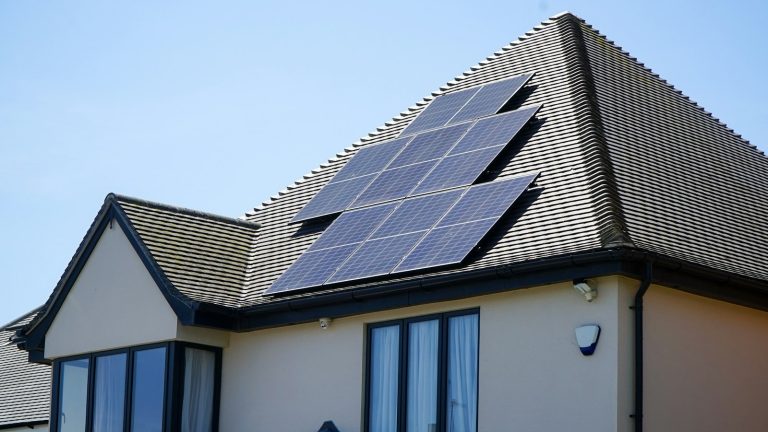
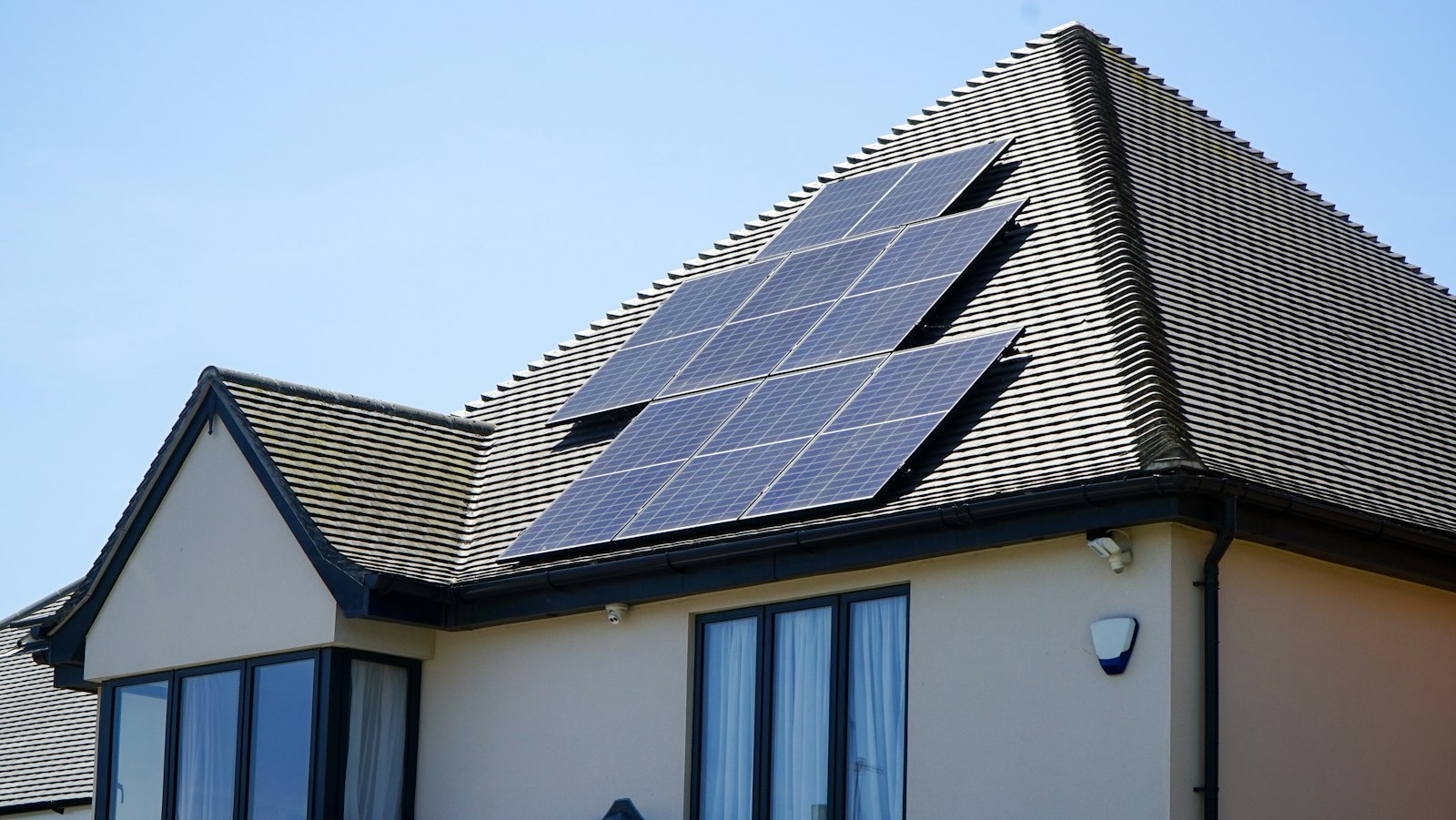
Rooftop solar with a home battery can still pay off in 2026, but the math changed. The 30% federal tax credit for home solar and batteries is gone, and California pays much less for solar power you send to the grid than it used to. This guide explains what changed, how to estimate payback for your own home, and when solar alone, solar plus a battery, or waiting makes the most sense.
Quick answer: Often yes in California, but it takes longer to pay off: the federal 30% credit ended for systems installed after December 31, 2025, so your payback now depends mostly on your electricity rates, how much power you use from 4 to 9 p.m., and whether a battery lets you use your own solar in those expensive evening hours.
Key numbers at a glance
- 0%: the federal residential clean energy credit (Section 25D) for systems whose installation is completed after December 31, 2025 (IRS).
- April 15, 2023: the date new California solar customers of the big utilities started on the Net Billing Tariff, often called NEM 3.0 (CPUC).
- Nearly 70%: the share of Net Billing Tariff customers who paired batteries with their solar by the end of 2024 (CPUC).
- 9 years: how long the original customer is guaranteed to stay on the Net Billing Tariff (CPUC).
- 33.61 cents per kWh: California’s average residential electricity price in July 2026, compared with 18.31 cents for the U.S. as a whole (EIA).
- 59 cents vs. 33 cents: Southern California Edison’s summer weekday on-peak (4 to 9 p.m.) and off-peak prices on its TOU-D 4-9 PM plan (SCE).
- 7.4 kW: the median size of new U.S. home solar systems in 2023 (Berkeley Lab).
You can test all of this on your own home with our free Home Energy Simulator, which models solar and batteries under California’s Net Billing Tariff.
What changed for solar in 2026
The federal tax credit ended
For years, the federal government paid back 30% of the cost of home solar and batteries through the Section 25D residential clean energy credit. A 2025 federal law ended it. The IRS says the credit is not allowed for any expenditures made after December 31, 2025, and an expenditure counts as made when the original installation is completed (IRS). If you buy a system in 2026, you pay the full price yourself.
California pays less for exported solar
Since April 15, 2023, new solar customers of PG&E, SCE and SDG&E have joined the Net Billing Tariff. Power you send back to the grid is credited at a rate based on its value to the grid, which the California Public Utilities Commission says is “usually lower than import rates” (CPUC). In plain words: a kilowatt-hour you use yourself saves you the full retail price, but a kilowatt-hour you export often earns much less.
There is one small bonus. The CPUC says residential PG&E and SCE customers who apply to connect before the end of 2027 get slightly higher export credits for nine years (CPUC).
Evening power is the expensive power
Most California households are on time-of-use plans. On SCE’s TOU-D 4-9 PM plan, for example, a summer weekday kilowatt-hour costs about 59 cents from 4 to 9 p.m. and about 33 cents at other times, before the baseline credit (SCE). Solar panels make the most power around midday, then fade just as prices peak. That mismatch is the whole reason batteries matter now.
How a battery shifts solar into the evening
A home battery fills up with extra solar power during the day. After 4 p.m., it runs your lights, fridge, TV and cooking instead of buying grid power at peak prices. The CPUC notes that customers can “maximize bill savings” under the Net Billing Tariff by adding storage so they can use or export stored energy during high-value hours (CPUC).
That is why so many people pair them. Nearly 70% of Net Billing Tariff customers had added batteries by the end of 2024 (CPUC). Berkeley Lab found a similar pattern: roughly 60% of residential solar installs under the new net billing tariffs were paired with storage, even though only 14% of all California residential solar installs in 2023 included a battery (Berkeley Lab).
A battery also gives backup power during outages, which matters to some families even if it does not change the bill math. For the technical side of sizing and wiring, see How to Pair a Home Battery Bank with Your Solar Panels.
How to estimate your payback
Simple payback is the number of years it takes for bill savings to cover what you paid:
Payback (years) = net cost of the system ÷ yearly bill savings
Here is a hypothetical example with made-up round numbers, only to show the math. These are not real quotes or typical prices.
- Suppose a solar-plus-battery system costs 30,000 dollars with no tax credit.
- Suppose it cuts your electric bill by 2,500 dollars a year.
- Payback = 30,000 ÷ 2,500 = 12 years.
- If the same system had qualified for the old 30% credit, the net cost would have been 21,000 dollars, and payback would have been about 8.4 years.
To use your own numbers, follow these steps:
- Get 12 months of usage. Download your hourly or monthly data from your utility account. Note your rate plan.
- Find your evening share. Look at how many kilowatt-hours you use from 4 to 9 p.m. That is the power a battery can replace.
- Get two or three written quotes. Ask each installer for the system size, total price, expected yearly production and estimated first-year bill savings under the Net Billing Tariff.
- Divide price by savings. That gives simple payback. Compare it to how long the panels and the battery are each warrantied. If the battery’s warranty is shorter, plan for it to need replacing before the panels do.
- Adjust for change. Rates have risen in recent years, which shortens payback, but nobody can promise future rates. Treat any installer’s rate-increase assumption with care.
Incentives that still exist
The federal credit is gone, but a few programs remain. Check each one’s current status before you sign anything, because budgets open and close.
- California SGIP (Self-Generation Incentive Program): pays rebates for batteries. The CPUC has authorized 280 million dollars for its Residential Solar and Storage Equity budget, which is available to low-income residential customers (CPUC). Other residential categories have been more limited, so ask your installer or check the program’s site for what is open today.
- Utility and local programs: some utilities, community choice providers and cities offer battery or efficiency rebates. Search your utility’s website and your city’s sustainability office.
- Leases and power purchase agreements (PPAs): with these, a company owns the system on your roof and you pay a monthly fee or a price per kilowatt-hour. The 25D credit never applied to company-owned systems. Those companies use business tax credits instead, and the same 2025 law set a cutoff for solar: under IRS guidance, the business clean electricity investment credit (Section 48E) ends for solar projects placed in service after December 31, 2027, unless construction began by July 4, 2026 (IRS Notice 2025-42). Whether a given lease qualifies is the company’s tax question, but it can affect the price it offers you. Read the contract carefully, including the escalator (yearly price increase) and what happens if you sell your home.
Solar alone, solar plus battery, or wait?
Solar alone may make sense if
- You use a lot of power during the day, for example someone works from home, or you charge an EV at midday.
- You are on an older net metering plan and are adding panels in a way that keeps your existing plan (ask your utility first).
- Your budget is tight and you plan to add a battery later. Ask for a battery-ready inverter.
Solar plus a battery often makes sense if
- You are a new solar customer in California under the Net Billing Tariff.
- A big part of your use falls between 4 and 9 p.m.
- You want backup power during outages or Public Safety Power Shutoffs.
Waiting may make sense if
- Your roof needs replacing within a few years. Re-roofing first avoids paying to remove and reinstall panels.
- You plan to move soon.
- You haven’t done the cheap stuff yet. Sealing drafts, adding insulation and smart thermostat settings lower the bill a solar system has to cover, so you may need a smaller system. See 12 Ways to Save Money and Energy at Home.
Options for renters and condo owners
You don’t need to own a roof to cut your bill or your carbon.
- Shift your use. Run the dishwasher, laundry and EV charging before 4 p.m. or after 9 p.m. Our guide on how to use a free weather app to time your energy use shows how.
- Pick a cleaner power plan. Many community choice providers offer a higher-renewable option. Check your bill to see who supplies your power.
- Ask your HOA or landlord. Some condo buildings install shared solar. A short, polite letter with your utility data can start the conversation.
- Make efficiency upgrades you can take with you, like window film, LED bulbs and draft stoppers.
How to model it in the Home Energy Simulator
Open the Home Energy Simulator and try this:
- Pick your region. Santa Monica, with SCE or Clean Power Alliance plus SoCalGas, is the default.
- Enter your home size, heating and cooling system and typical bills.
- Check the rate sliders and change them to match your own bill.
- Add rooftop solar alone and note the bill savings and payback time.
- Now add a home battery and compare. Watch how much evening grid power it replaces.
- Try an efficiency upgrade first, like a smart thermostat or insulation, then add solar again to see if a smaller system works.
Frequently asked questions
Is solar still worth it in California without the tax credit?
For many homes it still is, because California electricity prices are high, averaging 33.61 cents per kWh for households in July 2026. But payback is longer than it was with the 30% credit. Run your own numbers with real quotes before you decide.
Can I still get the 30% federal solar tax credit in 2026?
No, not for a system you own. The IRS says the residential clean energy credit is not allowed for expenditures made after December 31, 2025, and an expenditure counts as made when installation is completed.
Is a battery worth it under NEM 3.0?
Often, yes. Under the Net Billing Tariff, exported solar earns less than the retail price, so storing midday solar and using it from 4 to 9 p.m. is usually worth more. That is why nearly 70% of Net Billing Tariff customers added batteries by the end of 2024.
How long does solar take to pay for itself now?
It depends on your price, your rates and your usage. Divide the system’s net cost by your expected yearly bill savings. Without the federal credit, the same system takes noticeably longer to pay back than before.
Should I lease solar instead of buying?
A lease or PPA means no big upfront cost, but you usually save less over time and you sign a long contract. Compare the total cost over the full term to buying, and check the yearly price escalator and the rules if you sell your home.
Run your own numbers
Every home is different, so a general answer only goes so far. Our free Home Energy Simulator lets you compare solar alone with solar plus a battery under California’s Net Billing Tariff, using your own home size and utility rates, and shows bill savings, payback time and the carbon you cut.
Related guides
- How to Pair a Home Battery Bank with Your Solar Panels
- Solar Power Takes Center Stage: How 2024 Became the Year the U.S. Grid Went Big on Sunshine
- How to Install a $25 Programmable Thermostat (and Skip the $250 Smart One)
- Vehicle-to-Grid Integration: Enhancing Energy Efficiency with Solar Power
Sources
- Internal Revenue Service, FAQs for modification of sections 25C, 25D, 25E, 30C, 30D, 45L, 45W and 179D under Public Law 119-21
- Internal Revenue Service, Notice 2025-42: Sections 45Y and 48E beginning of construction
- California Public Utilities Commission, Net Energy Metering and Net Billing
- California Public Utilities Commission, Self-Generation Incentive Program
- U.S. Energy Information Administration, Electric Power Monthly, Table 5.6.A: Average price of electricity by state
- Southern California Edison, Time-of-Use rate plans
- Lawrence Berkeley National Laboratory, Tracking the Sun 2024 executive summary
Written and reviewed by the Accessible Sustainability Alliance editorial team. Last updated October 5, 2026.