Halloween is fun, but it can leave behind a pile of rotting pumpkins, candy wrappers and costumes worn once. With a few simple choices, your family can keep most of that out of the trash and save money too.
Quick answer: Eat your pumpkin’s seeds and flesh, then put what is left in the green organics bin or compost pile instead of the trash. Choose candy with less packaging, reuse or swap costumes, and buy decorations you can use again. Americans plan to spend about $13.5 billion on Halloween in 2026, so small swaps add up.
Why Halloween waste matters
Halloween is a big shopping holiday. The National Retail Federation’s 2026 survey expects spending of $13.5 billion, above last year’s record of 13.1 billion dollars, including about $4.4 billion on costumes, $4.3 billion on decorations and $4.1 billion on candy (NRF). The good news: 34 percent of shoppers say they plan to look for items they can reuse in future years or repurpose.
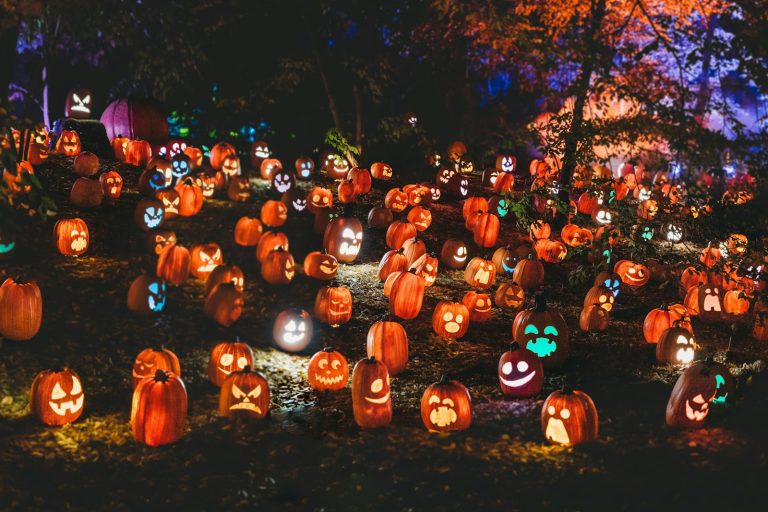
Pumpkins are a big part of the season. U.S. farms grew about 1.47 billion pounds of pumpkins in 2025, and California was the second-largest producer after Illinois (USDA Economic Research Service). Most pumpkin acres in the country go to fresh and ornamental pumpkins, which includes jack-o’-lanterns, rather than canned pumpkin.
When pumpkins and other food scraps rot in a landfill, they release methane. CalRecycle says organic waste in landfills is responsible for 20 percent of California’s methane, a climate pollutant that traps far more heat than carbon dioxide (CalRecycle).
Want to see how your household’s trash adds up? Try the free Household Waste Simulator before and after Halloween.
Pumpkins: eat them, then compost them
A carved pumpkin does not have to be trash.
- Save the seeds. Rinse them, toss with a little oil and salt, and roast them in the oven until golden. They make a crunchy snack.
- Cook the flesh. Pie pumpkins (smaller, sweeter types) are best for soup, muffins and pie. Carving pumpkins are stringier but still edible. Only eat pumpkin that was cooked soon after cutting, not a jack-o’-lantern that sat on the porch for days.
- Carve later. A pumpkin carved a day or two before Halloween lasts longer than one carved two weeks early. Uncarved pumpkins can decorate your porch all fall.
- Remove the extras. Before composting, take off candles, wax, stickers, glitter and paint, which will not break down (I Love A Clean San Diego).
- Use the green bin or compost. In California, SB 1383 requires every city and county to provide organic waste collection to all residents (CalRecycle). That means pumpkins, food scraps and yard trimmings belong in your green organics bin, not the trash. You can also chop the pumpkin into pieces and add it to a backyard or countertop compost bin.
Outside California, check your city’s yard waste or compost rules, or look for a community compost drop-off. Some towns hold pumpkin collection events in early November.
Candy: less packaging, smarter sorting
Candy wrappers are a recycling trap. Most are made of thin plastic film or plastic mixed with foil. The City of Santa Barbara explains that film plastic, including wrappers and chip bags, is not recyclable in curbside blue bins and should go in the trash (City of Santa Barbara). Many other cities have the same rule. Putting wrappers in the blue bin can contaminate the recycling.
Ways to cut candy waste:
- Pick bigger packs over tiny wrapped pieces when you can, or choose treats in cardboard boxes.
- Skip extra bags. Pour candy into a reusable bowl instead of buying pre-bagged party packs.
- Sort at home. Put cardboard candy boxes in recycling, and wrappers in the trash.
- Make a plan for leftovers. Freeze chocolate for baking, or share extras with neighbors and friends rather than letting them go stale.
- Check your city’s guide. Rules for things like foil and paper vary by city.
Costumes: swap, thrift, DIY or reuse
Costumes are the biggest Halloween spending category in the NRF survey. Many are worn one night and then forgotten.
- Host a costume swap. Ask friends, classmates or neighbors to bring costumes they have outgrown and trade. A school or club swap can be a fun October event.
- Shop secondhand. Thrift stores often have a costume section in October, and everyday thrift clothes make easy costumes.
- Make it yourself. Build a costume from clothes you already own. A pumpkin, a ghost and a hot dog were among the most popular costumes in this year’s NRF survey, and all three are easy to make at home.
- Choose reusable pieces. Pick a costume that can become dress-up clothes, a school play outfit or next year’s Halloween look.
- Pass it on. When you are done, give costumes to a younger friend, a swap or a donation center.
Decorations and trick-or-treat bags
- Buy decorations you will reuse for years. Fabric, wood and sturdy plastic decorations last longer than single-use paper ones.
- Skip fake spider webbing. Stretchy webs are hard to clean up and usually end up in the trash after one use.
- Use LED lights. Residential LEDs use at least 75 percent less energy and last up to 25 times longer than incandescent bulbs (U.S. Department of Energy). Put them on a timer so they turn off at bedtime. Our guide to setting a programmable timer for holiday lights shows how.
- Decorate with nature. Gourds, uncarved pumpkins, leaves and pine cones look great and can be composted afterward.
- Use a reusable treat bag. A pillowcase, a tote bag or a bucket from last year works better than a new plastic pail.
Frequently asked questions
Can I put my Halloween pumpkin in the green bin?
In California, yes. SB 1383 requires cities to collect organic waste like food scraps and yard trimmings, and pumpkins count. Remove candles, wax, stickers, glitter and paint first, and check your city’s list for local rules.
Are candy wrappers recyclable?
Usually not in curbside bins. Most wrappers are plastic film or plastic mixed with foil, which many cities, including Santa Barbara, ask residents to put in the trash. Cardboard candy boxes can usually go in recycling.
Are painted pumpkins compostable?
Not with the paint, glitter or glue on them. Those materials do not break down and can contaminate compost. If you want to decorate a pumpkin you plan to compost, use removable items like ribbon, leaves or pins you take off later.
How can students make Halloween more sustainable at school?
Organize a costume swap, set up labeled bins for compost, recycling and trash at the class party, and ask families to bring treats with less packaging. Students can also weigh the party’s trash and compost to compare with next year.
See your Halloween waste impact
Curious how pumpkins, wrappers and packaging change your household’s trash? Open the free Household Waste Simulator, turn on composting and less packaging, and see how many pounds you keep out of the landfill and how much methane that avoids.
Related guides
- How to Set Up a Home Recycling Station That Actually Works
- How to Make Zero-Waste Vegetable Broth from Scraps
Sources
- National Retail Federation, NRF Halloween Survey Shows Consumer Spending Expected to Reach 13.5 Billion Dollars (September 22, 2026)
- USDA Economic Research Service, Pumpkins: Background and Statistics
- CalRecycle, California’s Short-Lived Climate Pollutant Reduction Strategy (SB 1383)
- City of Santa Barbara, Place Candy Wrappers in the Trash
- I Love A Clean San Diego, Give Your Pumpkins a Second Life in the Green Bin
- U.S. Department of Energy, LED Lighting
Written and reviewed by the Accessible Sustainability Alliance editorial team. Last updated October 5, 2026.