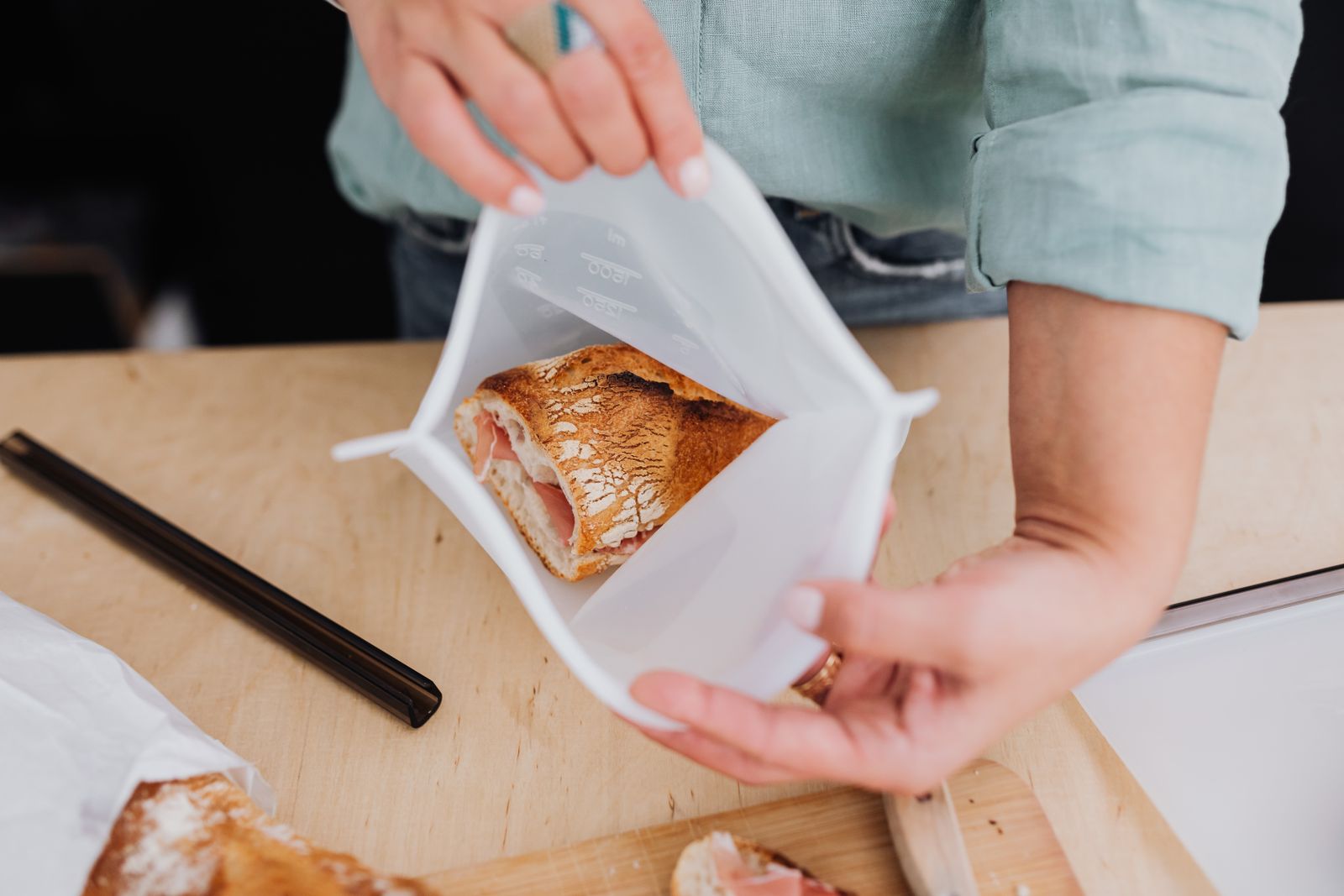
Single-use zip-top bags are handy, but they get used for a few minutes and then thrown away. Reusable silicone bags do the same jobs, from packing sandwiches to freezing soup, and can last for years with good care. The trick is to switch a little at a time.
Quick answer: Buy two or three silicone bags in the sizes you use most, use them for your most common jobs first (like lunches and leftovers), wash them right after use with hot soapy water or in the dishwasher, dry them open, and keep them where your plastic bags used to be.
Why switch from plastic bags?
Plastic bags and wraps are a big part of household trash, and very little plastic gets recycled. EPA reports that the United States generated 35.7 million tons of plastic in 2018, and only about 8.7 percent was recycled. Containers and packaging, which includes bags, sacks and wraps, made up the largest share of plastic waste (EPA).
EPA says plastic bags, wraps and films cannot go in your household recycling bin. Some stores collect them, but you have to cut the zippers off sandwich bags first (EPA). A silicone bag that you reuse hundreds of times replaces a long line of bags that would otherwise end up in the landfill.
Silicone bags cost more up front than a box of plastic bags. Over time, though, reusing the same few bags means you buy fewer boxes.
What you need
- Two or three silicone bags to start. Sandwich and small snack sizes are the most useful first buys.
- One larger stand-up bag for leftovers, marinades or soup
- A bottle brush for corners
- A drying rack or a few wooden spoons to prop bags open
- Masking tape and a marker for labeling frozen food
How to switch to reusable silicone bags
- Notice what you use plastic bags for most. For many families it is lunches, cut fruit, snacks and leftovers.
- Buy silicone bags to match those jobs. Choose a brand that lists food-grade silicone and gives clear care instructions, including whether the bag is safe in the freezer, microwave and dishwasher.
- Use up the plastic bags you already own instead of throwing them out. Rinse and reuse sturdy ones for dry foods.
- Start with one daily habit, such as packing lunch in silicone bags, and build from there.
- Wash bags soon after use. Turn them inside out if possible, use hot soapy water and a bottle brush, or place them on the top rack of the dishwasher if the maker says it is safe.
- Dry bags fully, open, upside down on a rack or propped on a spoon. Trapped moisture can cause odors.
- Label frozen food with tape and a date, since tinted silicone can make contents harder to see.
- Store clean bags standing up in the drawer where plastic bags used to be, so grabbing them becomes automatic.
Tips
- To remove smells, rub a paste of baking soda and water inside the bag, let it sit overnight, then rinse.
- Fill bags with liquids while they stand in a bowl so they don’t tip.
- Keep raw meat in its own clearly marked bag and wash it well after each use.
- Seal bags carefully. Press along the whole seal to avoid leaks in lunch bags.
Frequently asked questions
Are silicone bags better than plastic Ziploc bags?
For the environment, a silicone bag is better if you reuse it many times, since one bag replaces a large number of single-use bags. Silicone usually can’t go in curbside recycling, so choose a durable bag and use it for years.
Can you put silicone bags in the dishwasher?
Many silicone bags are dishwasher-safe on the top rack. Check the maker’s instructions, then dry the bags fully open so no water stays trapped inside.
Can you freeze food in silicone bags?
Yes, most silicone bags are made for freezing. Leave a little space for liquids to expand, and label the bag with the date.
How do I get the smell out of a silicone bag?
Coat the inside with a baking soda and water paste and let it sit overnight, then rinse. Drying the bag in sunlight can also help.
See your waste impact
How much plastic does your household throw away each week? Try our free Household Waste Simulator to estimate your trash and see which reusable swaps make the biggest difference.
Related guides
- How to Switch from Plastic Wrap to Beeswax Wraps
- How to Replace Tupperware with Glass Storage Containers
- How to Replace Plastic Wrap with Insulated Lunch Bags
Sources
- U.S. EPA, Plastics: Material-Specific Data
- U.S. EPA, How Do I Recycle Common Recyclables
Written and reviewed by the Accessible Sustainability Alliance editorial team. Last updated October 5, 2026.