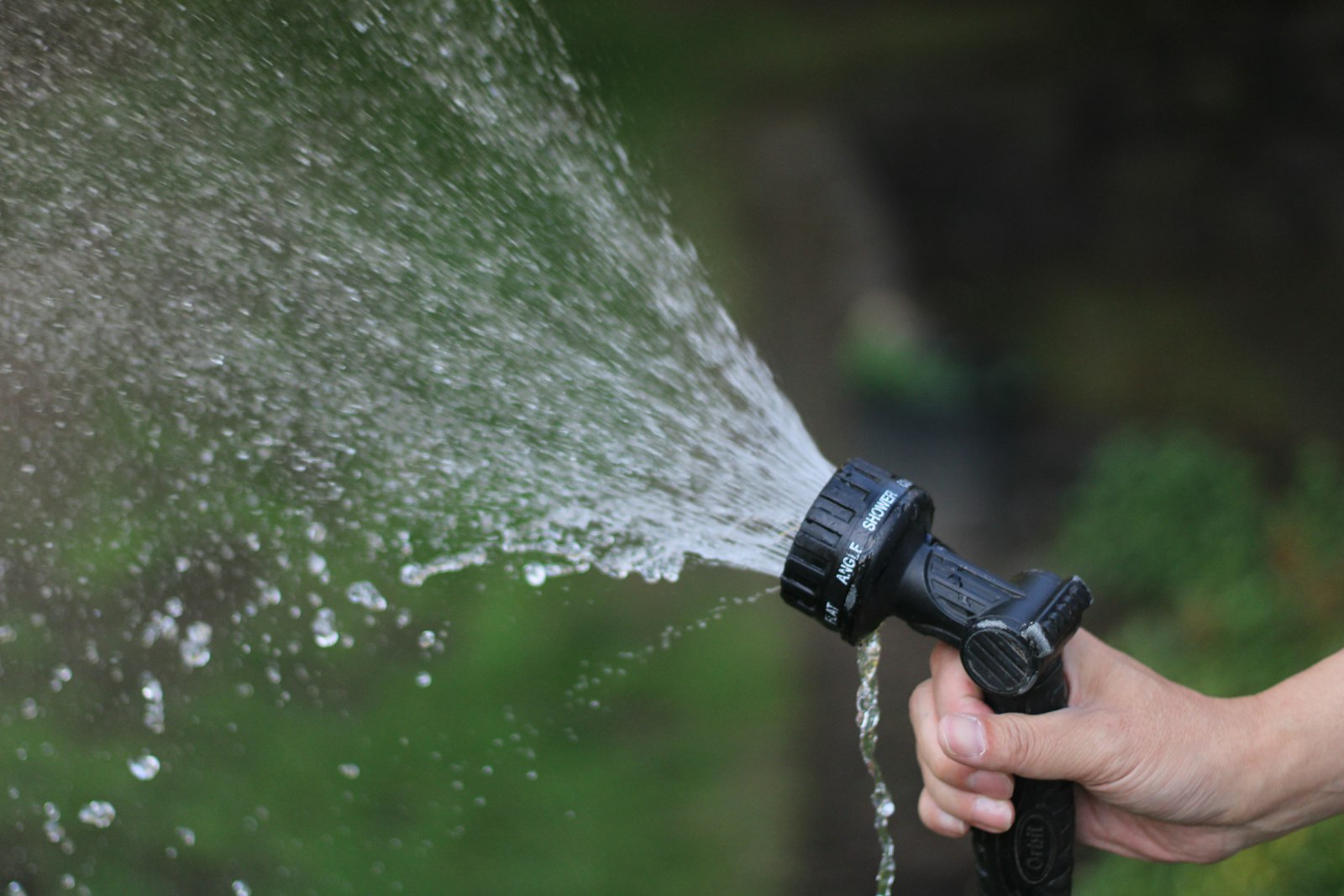
A soaker hose is a porous hose that slowly “sweats” water along its whole length, right onto the soil. Unlike a sprinkler, it doesn’t spray water into the air, onto leaves or across the sidewalk. For vegetable beds, shrubs and flower borders, it can save a lot of water and keep plants healthier.
Quick answer: Lay soaker hoses along your plant rows a few inches from the stems, connect them to the faucet through a backflow preventer, pressure regulator and timer, run them at low pressure until the soil is moist several inches down, and cover the hoses with mulch.
Why switch from sprinklers?
Sprinklers lose a lot of water before it reaches the roots. The U.S. EPA WaterSense program says as much as 50% of the water we use outdoors is lost to wind, evaporation and runoff caused by inefficient irrigation (EPA WaterSense). Outdoor water use is more than 30% of total household water use on average, and can reach 60% in dry regions.
Southern California is one of those dry regions, so garden watering is often the biggest place to save. Soaker hoses put water right at the soil, where roots can use it. Keeping leaves dry also helps prevent some fungal diseases on plants like tomatoes and squash.
What you need
- Soaker hoses long enough to run along your beds (avoid linking too many end to end)
- A regular garden hose to connect the faucet to the bed
- A backflow preventer for the faucet (often required by local plumbing codes)
- A pressure regulator made for soaker or drip systems
- A hose-end timer
- Landscape staples or U-shaped pins
- Mulch, such as wood chips or straw
How to switch to soaker hoses
- Plan the layout. Sketch your beds. Run hoses along each row of plants, a few inches from the stems. For wide beds, snake the hose back and forth about 12–18 inches apart so water reaches all the roots.
- Connect at the faucet. Attach the backflow preventer, then the pressure regulator, then the timer. Use a regular garden hose to carry water from the faucet to the start of the soaker hose.
- Lay and pin the hoses. Uncoil soaker hoses in the sun first so they relax. Lay them in place and pin them down every few feet. Put an end cap on the far end.
- Test the flow. Turn the water on slowly. The hose should seep and drip along its length, not spray. If it squirts, lower the pressure.
- Find your run time. Run the hose for about 30 minutes, then dig a small hole a few inches away. Water until the soil is moist about 6 inches down. Adjust the time up or down for your soil.
- Cover with mulch. Spread 2–3 inches of mulch over the hoses. It hides them, keeps them out of the sun and slows evaporation from the soil.
- Set the timer. Water early in the morning, a few times a week, instead of a little every day. Deep, less frequent watering grows deeper roots.
Common mistakes to avoid
- Running at full pressure. High pressure can burst a soaker hose or make it spray. Always use a regulator.
- Making runs too long. Very long hoses water unevenly, with the far end getting much less. Split big gardens into separate zones.
- Using soaker hoses on lawns. They work best in beds and rows. For lawns, an efficient sprinkler with a smart controller or a switch to native plants is a better fit.
- Forgetting to check. Look over hoses every few weeks for leaks or dry spots, and adjust run times as weather changes.
Frequently asked questions
How long should I run a soaker hose?
Many gardens need about 30 to 60 minutes per watering, but it depends on your soil, the hose and the water pressure. Check soil moisture a few inches down after the first few runs and adjust.
Are soaker hoses better than drip irrigation?
Soaker hoses are cheaper and easier to set up, which makes them great for rows and beds. Drip irrigation delivers water more evenly over long distances and to individual plants, so it is often better for bigger or more complex gardens.
Should soaker hoses be buried?
Don’t bury them deep in soil, but do cover them with a layer of mulch. Mulch protects the hose from sunlight and keeps moisture in the ground.
Do soaker hoses save water?
Yes. Because they release water slowly at the soil surface, much less water is lost to wind, spray and runoff than with sprinklers. EPA WaterSense notes that inefficient irrigation can waste as much as half of outdoor water.
See your water impact
Want to know how much water your garden, showers and appliances use? Try our free Household Water Simulator to see your family’s water footprint and which changes save the most.
Related guides
- How to Set a Sprinkler Timer Once and Never Touch It Again
- How to Set Up a Rain Barrel for Free Garden Watering
- How to Landscape with Native Plants to Cut Water Use
Sources
- U.S. EPA WaterSense, Statistics and Facts
- U.S. EPA WaterSense, Outdoors
Written and reviewed by the Accessible Sustainability Alliance editorial team. Last updated October 5, 2026.