
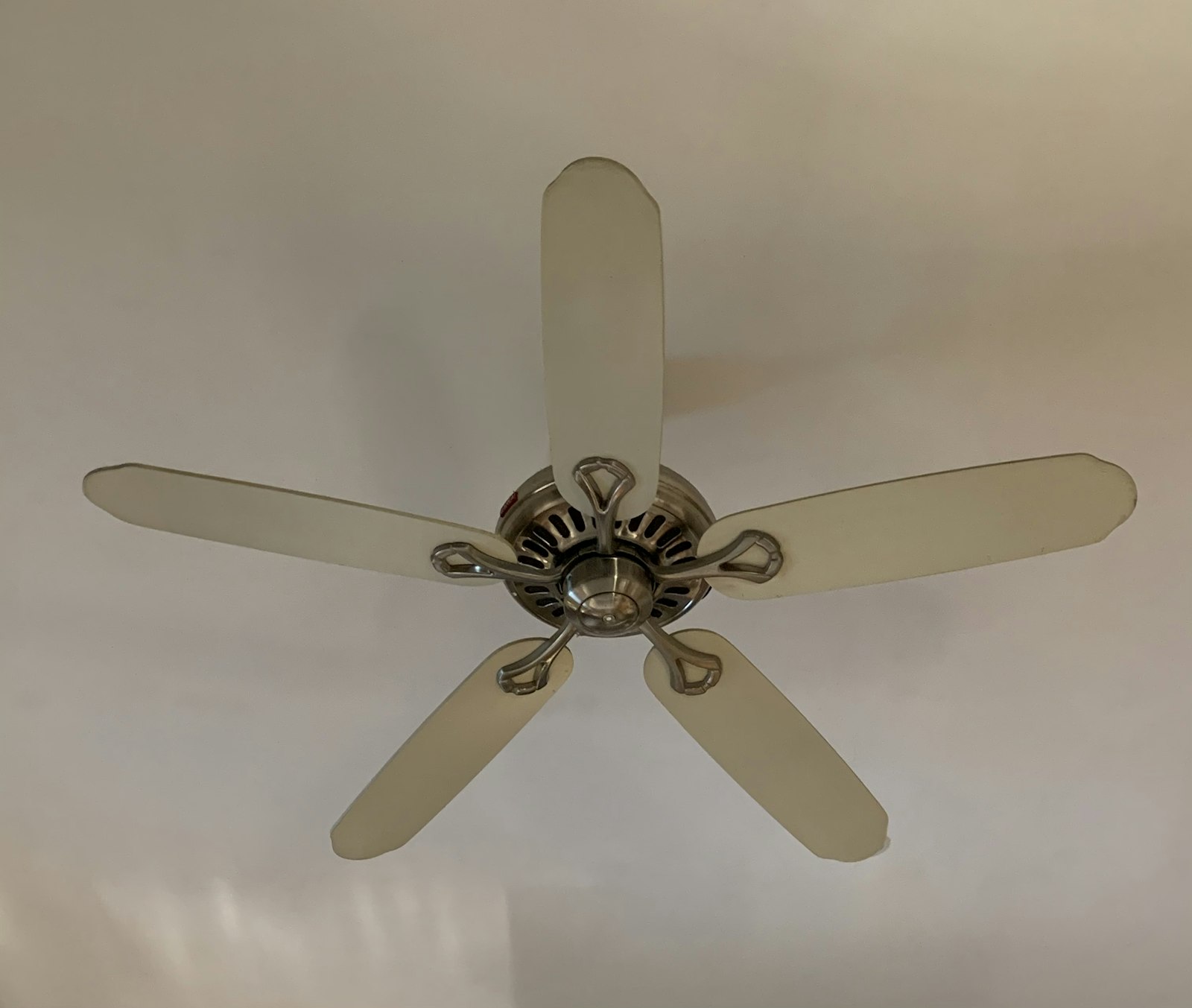
Warm air rises, so in winter the warmest air in a room often sits up near the ceiling where nobody can feel it. Flipping your ceiling fan to spin the other way gently pushes that heat back down. It takes about two minutes, costs nothing and can help you stay comfortable without turning up the heat.
Quick answer: In winter, set your ceiling fan to spin clockwise (when you look up at it) on the lowest speed. This pulls cool air up and pushes warm air from the ceiling down along the walls, so the room feels warmer without changing the thermostat.
Why reversing your fan matters
Heating and cooling are the biggest energy jobs in most homes. The U.S. Energy Information Administration reports that more than half (52% in 2020) of a household’s yearly energy use goes to space heating and air conditioning (EIA). Small tricks that help your heater work less can make a real difference on your bill.
The U.S. Department of Energy recommends reversing ceiling fans in winter so they run clockwise on a low speed to move warm air from the ceiling down to where people are (DOE Energy Saver). A fan uses far less electricity than a furnace or heat pump, so mixing the air you already paid to heat is a smart, low-cost move. Rooms with high or vaulted ceilings usually benefit the most.
What you need
- A sturdy step stool or ladder
- A dust cloth (fall is a good time to clean the blades)
- The fan’s remote or wall control, if it has one
How to reverse your ceiling fan for winter
- Turn the fan off and wait until the blades stop completely.
- Set up your step stool and stand where you can safely reach the motor housing (the round part above the blades).
- Find the direction switch. It is usually a small slide switch on the side of the housing. On newer fans, there may be a reverse button on the remote or wall control instead.
- Flip the switch to the other position.
- Wipe dust off the blades while you are up there, then climb down.
- Turn the fan on at the lowest speed and stand under it. You should feel little or no breeze. If you feel a strong draft, the fan is either on the wrong setting or too fast.
- Look up to confirm the blades are turning clockwise. Then try lowering your thermostat a degree or two and see if the room still feels comfortable.
Common mistakes to avoid
- Running the fan on high. A fast fan creates a wind-chill effect, even in reverse. Low speed is the goal.
- Leaving the fan on in empty rooms. Fans cool or warm people, not rooms. The Department of Energy advises turning ceiling fans off when you leave.
- Forgetting to switch back. In spring, set the fan to counterclockwise for a cooling breeze. In summer, a fan can let you set the air conditioning about 4°F higher with no loss of comfort, according to DOE.
- Expecting big savings without changing the thermostat. The fan helps you feel warmer. The savings come when you actually turn the heat down a little.
Frequently asked questions
Which way should a ceiling fan turn in winter?
Clockwise, when you stand under it and look up, at low speed. This creates a gentle updraft that pushes warm air down along the walls without a noticeable breeze.
How do I know which direction my ceiling fan is spinning?
Turn it on low and look straight up. Watch one blade and see if it moves like the hands of a clock (clockwise) or the other way (counterclockwise). In summer mode you will feel a breeze directly below; in winter mode you should feel very little.
Does reversing a ceiling fan really save money?
It can, when you use it to set your thermostat a bit lower. How much you save depends on your heating system, your ceiling height and your local energy prices, so results vary from home to home.
What if my ceiling fan has no reverse switch?
Check the remote or wall control, since many newer fans put the reverse function there. If there is no reverse option at all, running the fan isn’t helpful in winter, so keep it off.
See your home energy impact
Want to see how heating, cooling and appliances add up in your home? Try our free Home Energy Simulator to estimate your energy use and find the changes that save the most.
Related guides
- How to Make a DIY Door Draft Snake in 10 Minutes
- How to Check Your Attic Insulation with Just a Flashlight
- How to Install a $25 Programmable Thermostat (and Skip the $250 Smart One)
Sources
- U.S. Department of Energy, Fans for Cooling
- U.S. Energy Information Administration, Use of energy explained: Energy use in homes
Written and reviewed by the Accessible Sustainability Alliance editorial team. Last updated October 5, 2026.