Most used batteries should go to a battery drop-off, not the trash. Rechargeable, lithium and button batteries always need recycling, and in California every household battery does, even a single AA. This guide shows where each type of battery goes and how to find a drop-off near you in a few minutes.
Quick answer: Enter your ZIP code in The Battery Network locator (formerly Call2Recycle), which lists more than 20,000 drop-off sites, or take batteries to your local household hazardous waste site; in California, all household batteries, including AA and AAA alkalines, are banned from the trash.
Why it matters
Old batteries can start fires. The U.S. EPA counted more than 240 fires caused by lithium-ion batteries at 64 waste and recycling facilities between 2013 and 2020 (EPA). Batteries can hold enough energy to spark even when they seem dead.
Recycling also saves useful materials. EPA notes that some batteries contain cobalt, lithium and graphite, which the U.S. Geological Survey lists as critical minerals (EPA). To see how batteries and other trash add up at home, try the Household Waste Simulator.
What you need
- A plastic tub or zip-top bag for collecting used batteries (not a metal can)
- Clear packing tape or electrical tape
- Small plastic bags for damaged or swollen batteries
- Your ZIP code and a few minutes online
How to recycle batteries near you
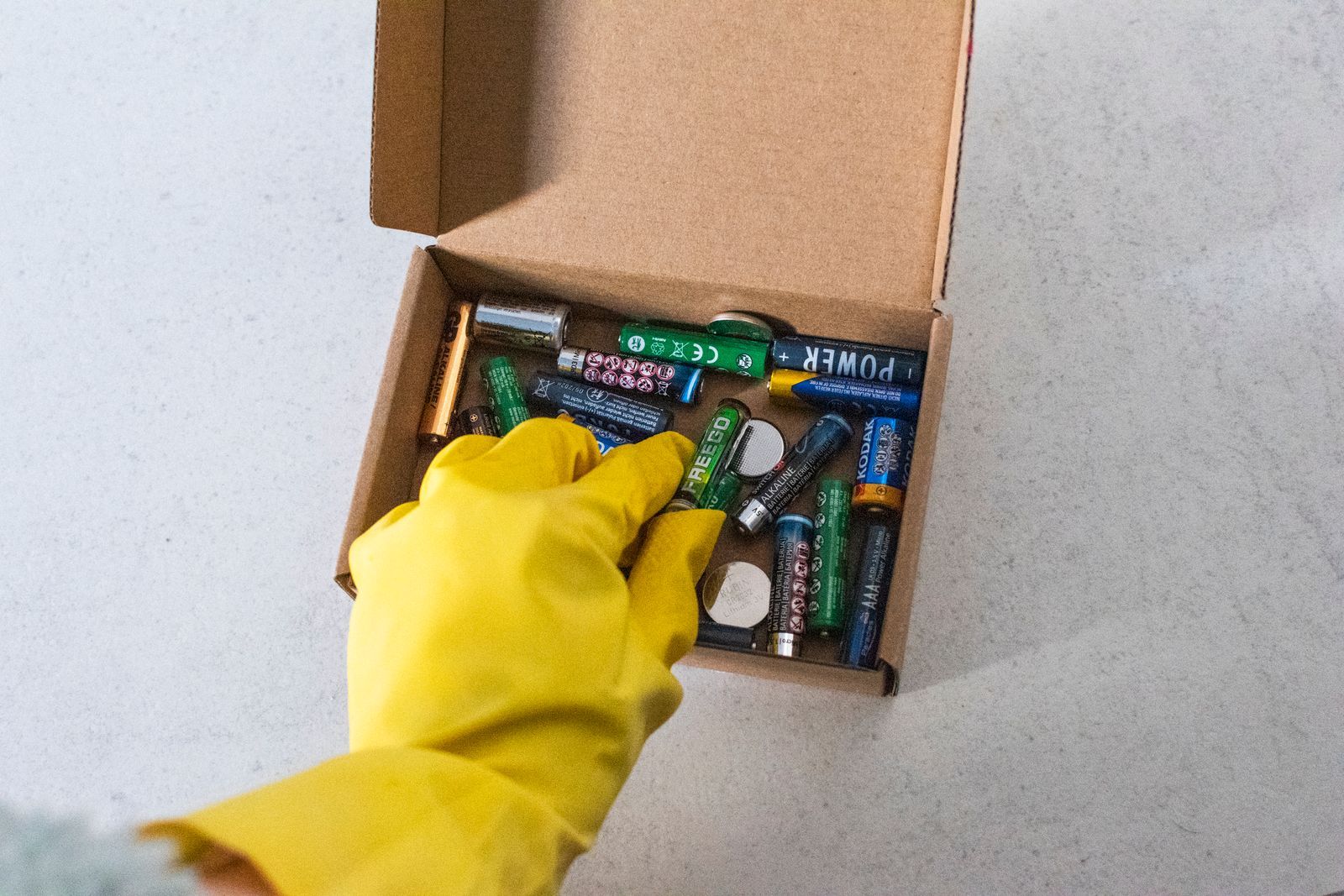
- Sort your batteries. Make piles for single-use alkalines (AA, AAA, C, D, 9-volt), rechargeables (NiCd, NiMH, lithium-ion), button cells and car batteries. Read the label, since a NiCd AA can look just like an alkaline AA.
- Tape the terminals. Put tape over the ends of lithium, rechargeable and 9-volt batteries, and over both sides of button cells. Or put each battery in its own plastic bag.
- Search The Battery Network. Enter your ZIP code in the Battery Network locator. Most sites take common household and rechargeable batteries, but only some take single-use alkalines, so check each listing.
- Search Earth911. Type “batteries” and your ZIP code into the Earth911 Recycling Search to see more nearby options.
- Use your household hazardous waste site. Your city or county household hazardous waste (HHW) facility or collection event takes the batteries stores turn down, plus damaged ones.
- Call ahead. Ask the store or site which battery types it accepts and when the bin is open.
- Drop them off. Bring your batteries in a plastic container and follow the instructions posted at the bin.
Where each type of battery goes
- Alkaline AA, AAA, C, D and 9-volt. EPA says these can go in household trash in most communities, but it recommends sending them to a battery recycler. In California they are banned from the trash, so use a drop-off that takes single-use batteries or your HHW site.
- NiCd and NiMH rechargeables. Never put them in the trash or curbside recycling bin. Take them to a battery drop-off, a store with a take-back bin or an HHW site.
- Lithium and lithium-ion. This includes phone, laptop and power tool batteries and single-use lithium batteries. Tape the terminals and take them to a drop-off or HHW site. If the battery is built into a device, recycle the whole device as e-waste.
- Button and coin cells. Watch, key fob and hearing aid batteries often contain lithium. Tape both sides and keep them away from young children, since they can be swallowed.
- Car batteries. Lead-acid car batteries can hold up to 18 pounds of lead, EPA says. Return them to a battery retailer or HHW program. EPA reports that 99 percent of lead-acid batteries were recycled in 2018.
California rules
California treats batteries as hazardous waste once you are done with them. The state Department of Toxic Substances Control says old batteries cannot go in the trash or household recycling bins because it is prohibited by law (DTSC). CalRecycle’s list of wastes banned from the trash covers all batteries: AAA, AA, C, D, button cell, 9-volt and others, both rechargeable and single-use. In Santa Monica and across Los Angeles County, that means every battery goes to a drop-off or HHW site.
Common mistakes to avoid
- Keeping batteries loose in a metal can. Loose ends touching metal or each other can short circuit.
- Putting lithium-ion batteries in your curbside bin. EPA says never put them in household garbage or recycling bins.
- Dropping swollen or damaged batteries in a store bin. The Battery Network says damaged batteries need special handling. Bag them alone and call your HHW site.
- Forgetting hidden batteries. Vapes, toys, electric toothbrushes and other small gadgets often have built-in lithium-ion batteries. Recycle the whole device as e-waste.
Frequently asked questions
Where can I recycle NiCd batteries?
Take NiCd batteries to a battery drop-off from The Battery Network locator, a store with a rechargeable battery bin, or your household hazardous waste site. Tape the terminals first, and never put them in the trash or curbside recycling.
How do I recycle AA and AAA batteries?
Look for a drop-off that accepts single-use batteries, since not every rechargeable bin takes them, or bring them to your HHW site. Outside California, EPA says alkalines can go in the trash in most communities, but recycling is still the better choice.
Can I throw away batteries in the trash?
Not in California, where all household batteries are banned from the trash. In other states, only plain alkaline and zinc-carbon batteries may be allowed, so check with your local waste agency first.
Where do I recycle button batteries?
Many battery drop-offs, participating stores and HHW programs take button cells. Tape both sides or bag each one, and store them out of reach of young children.
What should I do with a swollen lithium-ion battery?
Stop using it, put it in its own plastic bag, and keep it away from heat and anything flammable. Call your household hazardous waste site or the device maker, because damaged batteries should not go in regular drop-off bins.
See your impact
Batteries are only one part of what leaves your home. Use the free Household Waste Simulator to estimate your household’s trash and recycling and see which changes make the biggest difference.
Related guides
- How to Switch to Rechargeable Batteries for Your Gadget Drawer
- How to Set Up a Home Recycling Station That Actually Works
- SB 54 Explained: California’s Packaging Law and Your Recycling
Sources
- U.S. EPA, Used Household Batteries
- U.S. EPA, The Importance of Sending Consumers’ Used Lithium-ion Batteries to Electronic Recyclers or Hazardous Waste Collection Facilities
- U.S. EPA, National Overview: Facts and Figures on Materials, Wastes and Recycling
- California DTSC, Universal Waste: Batteries
- CalRecycle, Wastes Banned From the Trash
- The Battery Network, Drop-off Locations
- The Battery Network, What to Recycle
- Earth911, Recycling Search
Written and reviewed by the Accessible Sustainability Alliance editorial team. Last updated November 2, 2026.