You don’t need a big backyard to dry clothes outside. A retractable line, a folding rack or two short posts can turn a small yard or balcony into a drying spot that costs nothing to run. Sun and fresh air do the work your electric or gas dryer would do.
Quick answer: Pick a spot that gets sun and a breeze, mount a retractable line or sturdy hooks on two solid points (or use a folding drying rack), pull the line tight, hang clothes a few inches apart with clothespins, and bring them in before evening dew or rain.
Why line-drying is worth it
Clothes dryers are among the biggest energy users in many homes. ENERGY STAR says around 80% of U.S. households have a clothes dryer, and the average household runs more than 280 laundry cycles a year. With a conventional dryer, those loads likely use more energy than your refrigerator uses in a full year (ENERGY STAR).
Line-drying even some of your loads cuts that energy use, saves money and is gentler on fabric, so clothes last longer. In California, skipping the dryer during the 4–9 p.m. peak also helps you avoid the highest time-of-use electricity prices.
What you need
- A drying setup that fits your space: a retractable clothesline, a folding or wall-mounted drying rack, or a T-post clothesline kit for a yard
- Strong metal hooks or wall brackets rated for the weight of wet laundry
- A turnbuckle or line tightener to keep the line taut
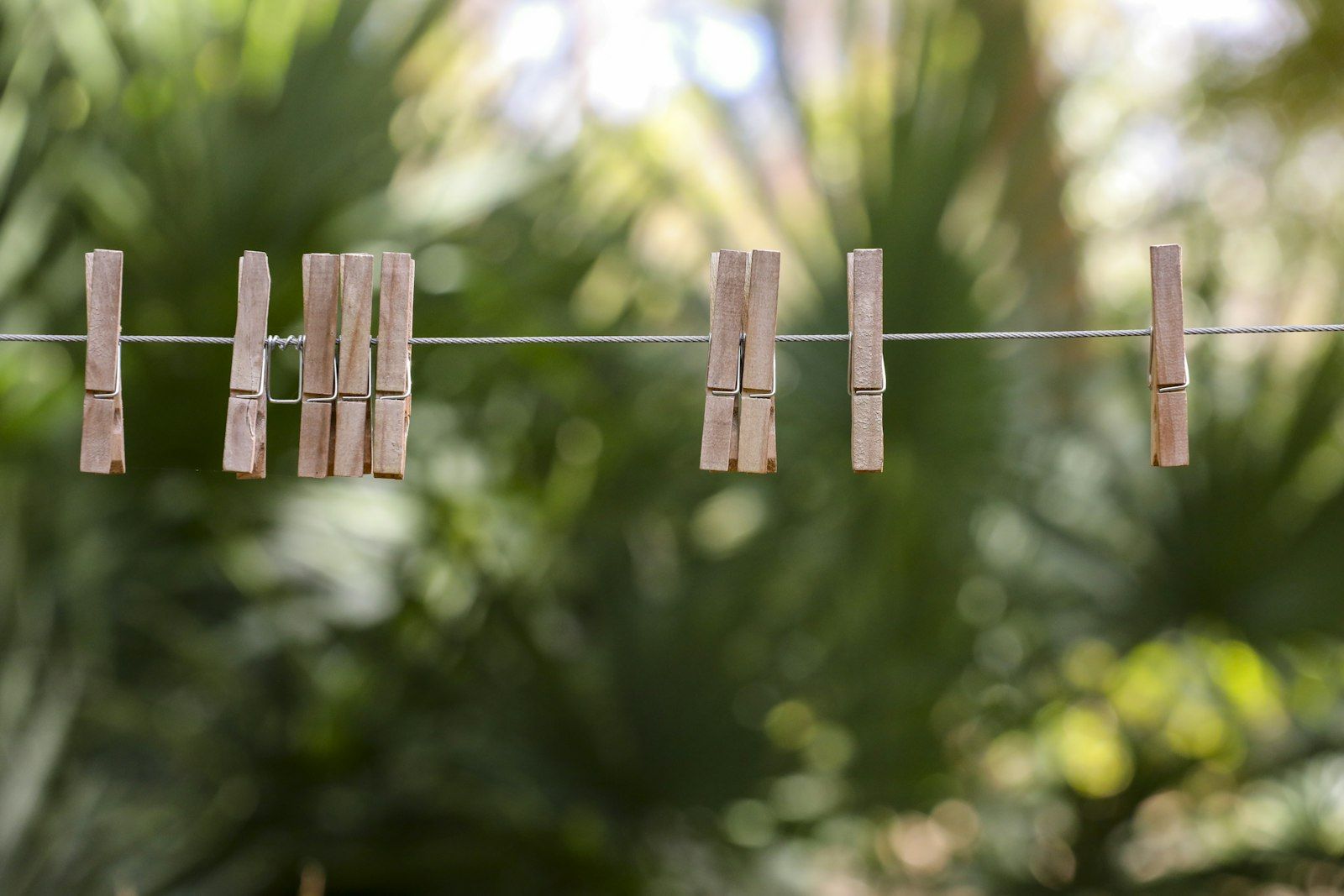
- Wooden or sturdy clothespins
- A drill and the right anchors for your wall (brick, wood or stucco), if mounting
- Landlord or HOA permission, if you rent or have building rules
How to set up a clothesline in a small space
- Check the rules. Some apartment buildings and HOAs limit what you can hang on balconies. In California, a 2015 law (AB 1448) stops HOAs from banning clotheslines in an owner’s backyard and lets renters use a line or rack in their private patio or balcony area, with the landlord’s approval and reasonable rules.
- Find the sun and breeze. Watch your yard or balcony for a day. In the Northern Hemisphere, south- and west-facing spots usually get the most sun. A breezy, shaded spot still works, just more slowly.
- Pick your setup. On a balcony, a folding rack or a retractable line between two walls takes the least space. In a yard, a retractable line mounted on a wall or fence, or two T-posts set about 6–8 feet apart, works well.
- Mount it securely. Screw hooks or the line’s base into solid wood, a stud or masonry anchors, not just drywall or thin railings. Wet laundry is much heavier than dry laundry, so skip cheap plastic hooks.
- Tighten the line. Attach a turnbuckle at one end and twist it until the line barely sags with a full load. A loose line lets clothes bunch up and touch the ground.
- Hang smart. Shake out each item, hang shirts by the hem and pants by the cuffs, and leave a few inches between pieces so air can move. Put heavy items like towels near the posts, where the line is strongest.
- Bring clothes in on time. Take laundry down once it is dry and before dew or rain. Retract the line or fold the rack when you are done.
Tips for faster, softer line-drying
- Use your washer’s highest spin speed to remove more water before hanging.
- Turn dark clothes inside out so strong sun doesn’t fade them.
- If towels feel stiff, give them a good shake before and after drying, or toss them in the dryer for 5 minutes on air fluff.
- On rainy days, an indoor rack near an open window or fan still beats running the dryer.
Frequently asked questions
How long does it take clothes to dry on a line?
On a warm, sunny, breezy day, light clothes can dry in an hour or two. Heavy items like jeans and towels may take several hours, and cool or humid days take longer.
Can I hang a clothesline on my apartment balcony?
It depends on your lease and local law. In California, renters may use a clothesline or drying rack in their private outdoor area once the landlord approves it, as long as it is safe and doesn’t block doors or utilities. Ask your landlord before drilling into walls.
Does sunlight fade clothes?
Strong, direct sun can fade bright and dark colors over time. Turn those items inside out or dry them in shade, and save the full sun for whites and towels.
How much does line-drying save?
It depends on your dryer, how many loads you do and your electricity or gas price. Because a conventional dryer can use more energy in a year than a refrigerator, every load you line-dry adds up.
See your home energy impact
Want to know how much your dryer and other appliances add to your energy use? Try our free Home Energy Simulator to compare changes like line-drying and see which ones save your household the most.
Related guides
- How to Clean Your Lint Filter for a More Efficient Dryer
- How to Choose a Front-Load Washer Over Top-Load for Efficiency
- How to Use a Free Weather App to Time Your Energy Use
Sources
- ENERGY STAR, Save More On Laundry with a Heat Pump Clothes Dryer
- California Legislature, AB 1448 (2015), clotheslines and drying racks
- ENERGY STAR, Certified Washers and Dryers fact sheet
Written and reviewed by the Accessible Sustainability Alliance editorial team. Last updated October 5, 2026.